
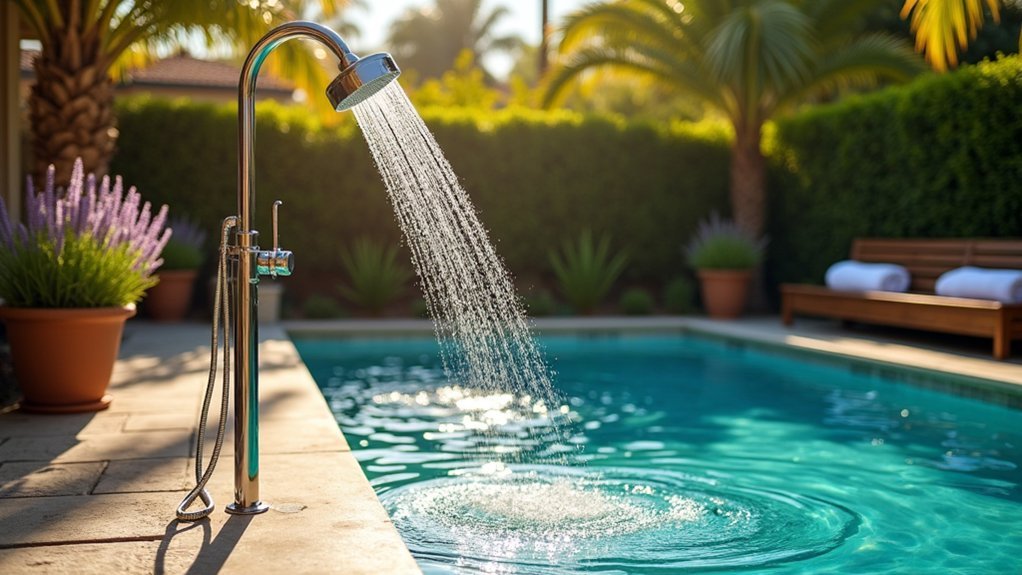
Your best outdoor pool shower options depend on your setup and budget. Freestanding showers offer easy installation with a garden hose connection, while wall-mounted systems provide a cleaner look with optional hot water access. Solar-powered models heat water naturally without electricity, and portable units work great for renters or flexible layouts. Built-in showers with permanent plumbing deliver the most reliable performance year-round. Each type brings distinct advantages worth considering for your space.
Freestanding Outdoor Pool Showers
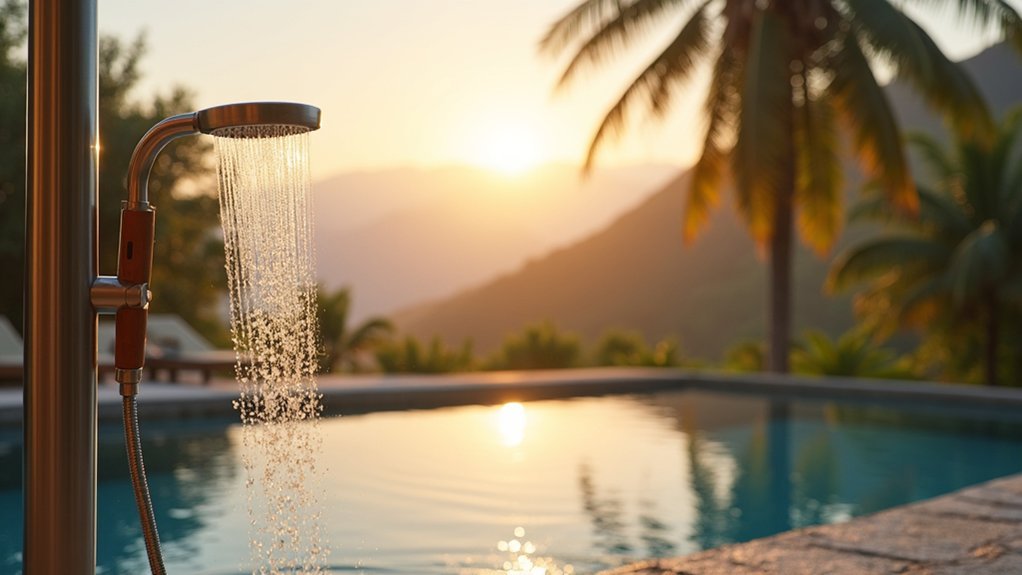
Freestanding outdoor pool showers offer the ultimate flexibility for your backyard setup. You can position them anywhere with access to a water supply, making them perfect for renters or homeowners who want easy relocation options. These units don’t require permanent installation, so you’ll save on labor costs.
You’ll find freestanding showers in various materials, including stainless steel, aluminum, and PVC. Stainless steel models resist corrosion and provide a sleek, modern look. PVC options cost less and work well for seasonal use.
When shopping, consider models with adjustable height settings and multiple spray patterns. Some feature built-in foot washes, which help keep your pool cleaner. Solar-powered versions heat water naturally, reducing energy costs while delivering a comfortable rinse. Connect most freestanding showers directly to your garden hose for quick setup.
Wall-Mounted Pool Shower Systems
When you’re ready to install a wall-mounted pool shower, you’ll need to weigh proper plumbing access, structural support, and drainage placement before mounting.
Your choice of materials matters greatly—stainless steel, brass, and marine-grade finishes resist corrosion from pool chemicals and outdoor elements far better than standard bathroom fixtures.
You can also select from cold-water-only models, solar-heated systems, or units connected to your home’s hot water supply for comfortable temperature control year-round.
Installation Requirements and Tips
Before you purchase a wall-mounted pool shower, you’ll need to assess your installation site carefully. Check that your chosen wall can support the fixture’s weight and has access to water supply lines.
You’ll want to take into account drainage options to prevent water pooling near your pool deck.
Here are four essential installation requirements:
- Make sure your water line can handle the necessary pressure for adequate flow
- Install a shut-off valve for winterization and maintenance access
- Position the shower at least 6 feet from the pool edge to meet code requirements
- Use corrosion-resistant mounting hardware designed for outdoor conditions
If you’re not confident in your plumbing skills, hire a licensed professional. Improper installation can lead to leaks, water damage, and costly repairs down the road.
Best Materials and Finishes
Selecting the right materials for your wall-mounted pool shower guarantees longevity and minimizes maintenance headaches. Stainless steel 316 stands out as the top choice because it resists corrosion from chlorine, salt, and harsh weather conditions. Marine-grade aluminum offers a lightweight alternative with similar durability.
For finishes, brushed or satin options hide water spots and scratches better than polished surfaces. Powder-coated finishes provide excellent UV protection and come in various colors to match your outdoor décor. Chrome works well in covered areas but may deteriorate faster when exposed to direct sunlight and pool chemicals.
You should also consider brass fixtures with PVD (Physical Vapor Deposition) coating for superior scratch resistance. Whatever you choose, verify the manufacturer rates the product specifically for outdoor and poolside use.
Water Temperature Control Options
Beyond material selection, your shower’s water temperature control system directly impacts daily comfort and usability.
Wall-mounted pool showers offer several temperature configurations to match your preferences and budget.
- Cold water only – The simplest setup connects directly to your garden hose or cold water line, providing invigorating rinses on hot days
- Manual mixing valves – These let you blend hot and cold water through separate handles for customized temperatures
- Single-lever mixers – You’ll control both flow and temperature with one handle for convenient operation
- Thermostatic valves – These maintain your preset temperature automatically, preventing sudden hot or cold surges
If you’re installing near your home’s exterior, connecting to existing hot water lines gives you year-round functionality and enhanced showering comfort.
Solar-Powered Pool Showers for Energy Efficiency
Solar-powered pool showers harness the sun’s energy to heat water stored in a tank, giving you a warm rinse without increasing your electricity bill.
You’ll want to take into account tank size carefully, as options typically range from 5 to 10 gallons depending on how many people will use the shower between refills.
Proper installation and placement are critical—you’ll need to position your solar shower in a location that receives direct sunlight for several hours each day to maximize heating efficiency.
How Solar Showers Work
Harnessing the sun’s energy to heat your pool shower water is both environmentally friendly and cost-effective. Solar showers contain a tank or reservoir that absorbs sunlight, naturally warming the water inside without electricity or gas.
Here’s how the process works:
- Cold water fills the dark-colored tank, which attracts and retains heat
- Solar radiation heats the water throughout the day, reaching temperatures up to 140°F
- When you turn on the shower, gravity or pressure pushes heated water through the showerhead
- A mixing valve lets you blend hot and cold water for comfortable temperatures
You’ll get the best results by positioning your solar shower in direct sunlight for several hours. Most units hold between 5-10 gallons, providing enough warm water for multiple showers daily.
Tank Size Considerations
When selecting a solar-powered pool shower, tank capacity directly impacts how many people can rinse off before the warm water runs out. You’ll want to match your tank size to your household’s typical usage patterns.
| Tank Size | Best For | Approximate Showers |
|---|---|---|
| 5-7 gallons | Solo users | 1-2 quick rinses |
| 8-10 gallons | Couples | 2-3 showers |
| 15-20 gallons | Small families | 4-5 showers |
| 25-35 gallons | Large families | 6-8 showers |
| 40+ gallons | Heavy use/parties | 10+ showers |
Consider how often you’ll refill the tank throughout the day. Larger tanks take longer to heat but provide extended use. If you’re hosting pool parties regularly, you’ll benefit from investing in a higher-capacity model that keeps guests comfortable without interruption.
Installation and Placement
Once you’ve determined the right tank size for your needs, finding the ideal spot for your solar shower becomes your next priority. Position your shower where it receives maximum sunlight throughout the day, typically facing south in the Northern Hemisphere.
Consider these four essential placement factors:
- Sun exposure: Choose a location with at least 6-8 hours of direct sunlight daily
- Drainage: Install near existing drainage or create a gravel bed to prevent pooling
- Proximity to pool: Place within convenient walking distance but far enough to rinse before entering
- Ground stability: Secure the base on level, firm ground to prevent tipping
You’ll also want easy access to your water supply line for refilling the tank between uses.
Cold Water vs. Hot and Cold Water Shower Options
Choosing between a cold water only shower and a hot and cold water model comes down to your budget, installation complexity, and how you plan to use the shower.
Cold water showers connect directly to your garden hose, making installation simple and affordable. They’re perfect for quick rinses after swimming and work well in warm climates where cool water feels invigorating.
Hot and cold water showers require connection to your home’s water heater, which means additional plumbing work and higher costs. However, they extend your shower’s usability into cooler months and provide comfort after evening swims when temperatures drop.
Consider your local climate and swimming season length. If you swim year-round or frequently use your pool at night, investing in a hot and cold option pays off.
Portable Pool Showers for Flexible Placement
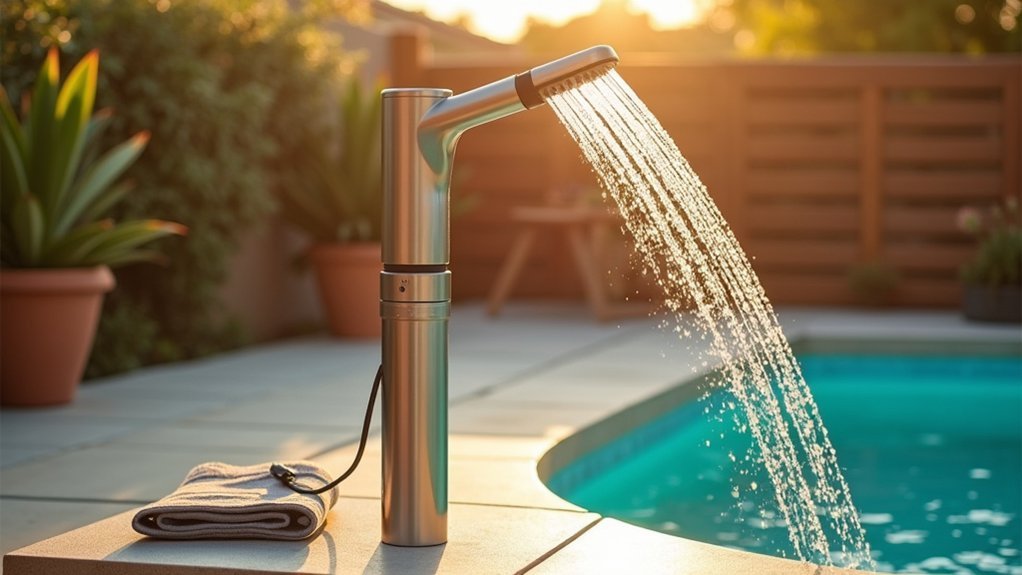
Not everyone wants to commit to a permanent shower installation, and that’s where portable pool showers offer a practical alternative.
These lightweight units let you position your shower wherever it makes the most sense for your pool area, and you can relocate them as your needs change.
Portable pool showers come in several varieties:
- Solar bag showers that heat water using sunlight and hang from hooks or stands
- Battery-powered units with rechargeable pumps for consistent water pressure
- Garden hose-connected models that provide instant cold water access
- Freestanding tanks with foot pumps for off-grid locations
You’ll appreciate the flexibility these options provide, especially if you’re renting your home or frequently rearrange your outdoor space.
Storage is simple since most models collapse or disassemble quickly.
Built-In Pool Showers With Permanent Plumbing Connections
When you’re ready for a permanent solution that adds lasting value to your property, built-in pool showers deliver reliability that portable options simply can’t match.
These fixtures connect directly to your home’s water supply, giving you consistent pressure and temperature control.
You’ll enjoy hot and cold water options year-round, making post-swim rinses comfortable even on cooler days.
Installation requires professional plumbing work, including trenching for underground pipes and proper drainage systems.
You’ll need to factor in permits and local building codes before breaking ground.
Built-in showers come in various materials—stainless steel resists corrosion, while stone or tile designs complement your pool’s aesthetic.
Though upfront costs run higher than portable alternatives, you’re investing in a feature that enhances your property’s functionality and resale appeal for decades.
Frequently Asked Questions
How Often Should I Clean and Maintain My Outdoor Pool Shower?
You should rinse your outdoor pool shower after each use and deep clean it weekly. Check drainage monthly, inspect fixtures for mineral buildup, and winterize before cold weather to prevent damage and extend its lifespan.
What Materials Are Most Resistant to Chlorine and Sun Damage?
You’ll find stainless steel (316 grade), teak wood, and marine-grade aluminum offer the best resistance to chlorine and UV damage. These materials won’t corrode, fade, or deteriorate quickly under constant pool chemical and sun exposure.
Do Outdoor Pool Showers Require Building Permits for Installation?
You’ll likely need a building permit for your outdoor pool shower, especially if it involves plumbing connections. Check your local building codes first, as requirements vary by municipality. Some portable options don’t require permits.
How Do I Winterize My Outdoor Pool Shower in Cold Climates?
You’ll need to drain all water from pipes and the showerhead, shut off the water supply valve, and disconnect hoses. Consider installing a blowout plug and covering the fixture to prevent freeze damage.
What Is the Average Cost to Install an Outdoor Pool Shower?
You’ll typically spend between $1,000 and $5,000 to install an outdoor pool shower. Your final cost depends on the shower type, plumbing complexity, materials you choose, and whether you’re connecting to hot water.


Leave a Reply