
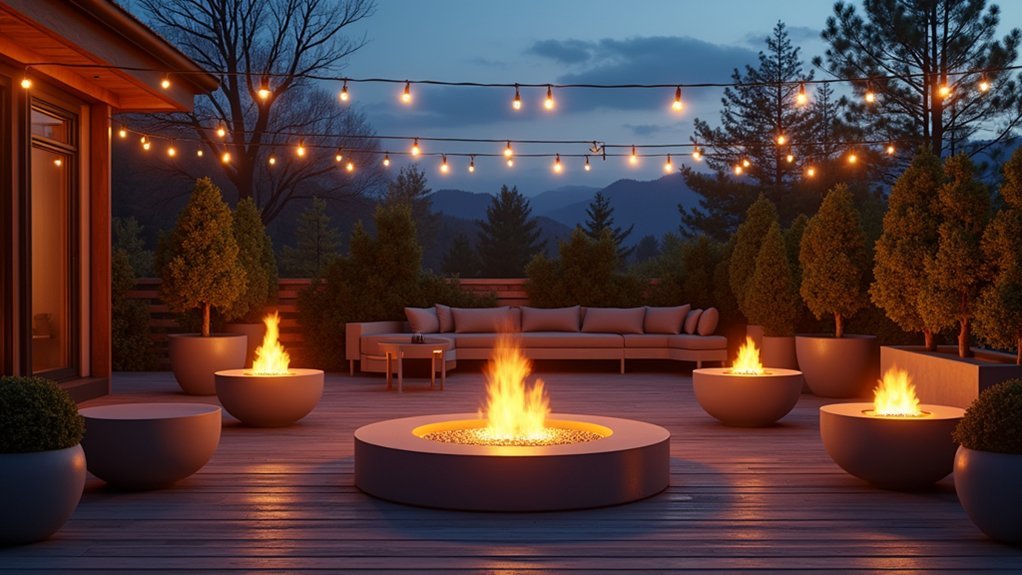
To effectively heat large outdoor spaces, you’ll need to assess your area’s size and wind exposure first. Place heaters strategically around seating zones, combining different technologies like radiant and convection systems. Choose appropriate fuel sources based on your infrastructure and ventilation. Implement smart controls for zone-specific heating. Add windbreaks and physical barriers to retain heat. Consider both upfront and long-term operating costs. These strategies will transform your outdoor entertaining, even during colder months.
Assess Your Space’s Size and Wind Exposure
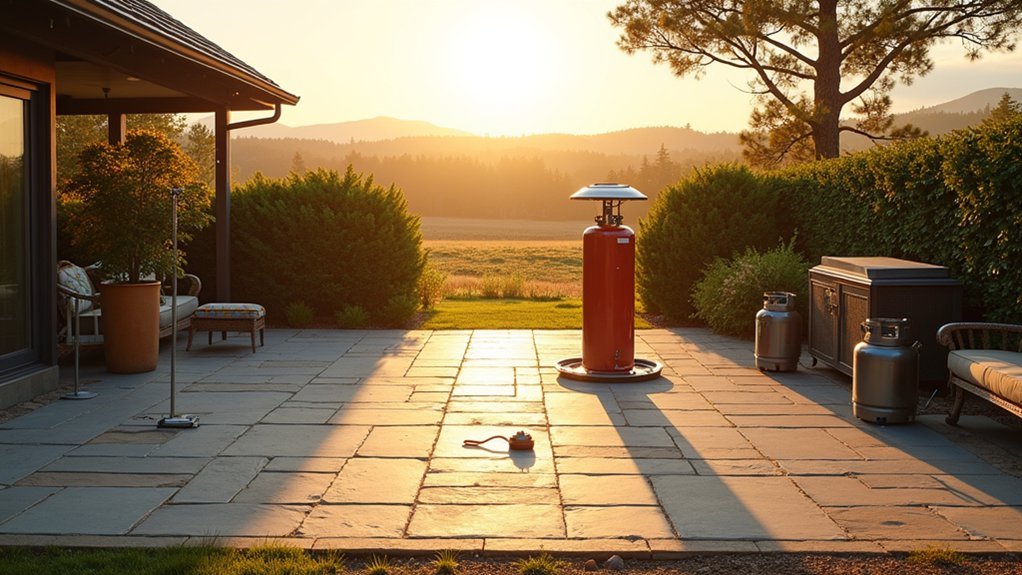
When planning to heat a large outdoor area, how thoroughly have you evaluated your space’s dimensions? Precise measurements are essential—larger areas require more BTUs or watts to achieve comfortable temperatures throughout. Don’t underestimate the importance of measuring your entire usable space to determine the appropriate number and placement of heaters.
Wind exposure significantly impacts your heating strategy. Outdoor areas with high wind exposure experience faster heat loss, reducing heater effectiveness by up to 50%. This is particularly true for convection-based heating systems. Take note of prevailing wind directions and seasonal patterns when positioning your heaters. Consider installing windbreaks where possible to maximize efficiency. For complex layouts or commercial projects, you’ll benefit from a professional heat mapping service that analyzes your space’s unique characteristics.
Choose Strategic Heater Placement for Maximum Coverage
Where you position your heaters can make the difference between a comfortably warm outdoor space and one with frustrating cold spots. Place high-heat, wide-coverage units in high-traffic areas and around seating arrangements to ensure warmth reaches everyone.
Combine directional radiant heaters with ambient convection systems—this creates both immediate warmth and sustained comfort throughout your space. Consider whether ceiling, wall, or freestanding mounts work best for your layout, prioritizing both heat projection and guest movement.
Always factor in prevailing wind patterns when positioning heaters, as this significantly impacts heat distribution. Align heaters strategically with your furniture configuration to minimize wasted heat.
For truly optimal results, take advantage of professional design services that can create a 2D Heat Map, showing precisely where to place each unit for maximum efficiency.
Select the Right Fuel Source for Your Outdoor Environment
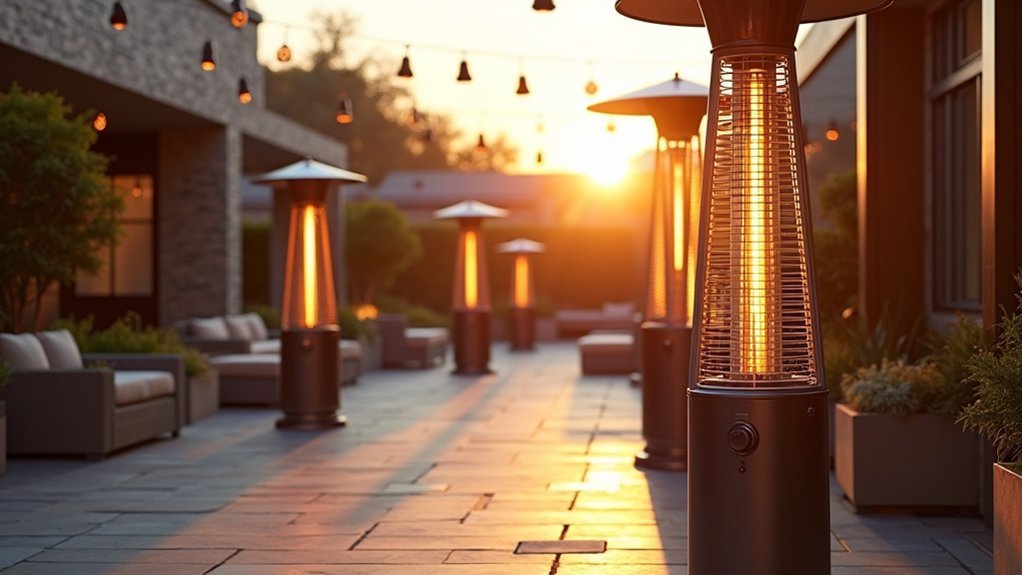
Choosing the right fuel source stands as a critical decision when heating outdoor spaces effectively. Your site’s existing infrastructure will largely determine what’s feasible—if gas lines are readily available, gas heaters become a practical option, while proper electrical capacity makes electric models viable.
Consider your space’s ventilation characteristics. Well-ventilated outdoor areas typically work best with gas heaters, whereas semi-enclosed spaces might benefit from electric options due to ventilation requirements.
Installation complexity differs significantly between fuel types. Gas heaters require professional installation to meet safety codes, while electric units must adhere to specific electrical specifications and clearances.
For comprehensive guidance, consult Bromic’s fuel selection guide or take advantage of their complimentary design service, which provides a 2D Heat Map and tailored recommendations based on your unique environment and operating cost considerations.
Combine Different Heating Methods for Complete Comfort
You’ll achieve superior comfort in large outdoor areas by layering different heating technologies throughout your space. Combine overhead infrared units that deliver direct warmth with free-standing propane heaters that create ambient heat zones for thorough temperature control. By establishing multi-zone heating systems that mix electric and gas sources, you’ll gain both the flexibility to adapt to changing layouts and the reliability of alternative options when one fuel source isn’t available.
Layer Heating Sources Strategically
Why settle for a single heating solution when a strategic combination can transform your outdoor space into a cozy haven? Balance your comfort by placing electric ceiling-mounted heaters where you need targeted warmth, while using infrared options to provide rapid personal heating.
For larger gathering areas, install propane heaters or gas fire pits that create both ambiance and significant heat output. Position high-output freestanding units in open seating zones and wall-mounted electric heaters along transit paths and dining sections.
To minimize heat loss from wind, combine directional radiant heat with convection options. You’ll also save on energy costs by pairing efficient infrared overhead units with higher BTU gas features. Always design your layout to maximize heat projection onto people and furniture, considering wind exposure and seating density.
Mix Fuel Technologies Efficiently
A sophisticated outdoor heating strategy combines multiple fuel technologies to create a thorough comfort solution. By leveraging both gas and electric units from Bromic’s collections, you’ll efficiently cover diverse areas regardless of weather conditions or space constraints.
- Position propane freestanding heaters in large, open seating zones where portability matters, while mounting electric heaters overhead in covered areas
- Utilize gas models’ higher BTU outputs for expansive spaces, reserving electric units for areas with limited fuel access or tight clearance requirements
- Request Bromic’s complimentary 2D Heat Map service to determine optimal placement when integrating multiple fuel types
- Always ensure proper ventilation and compliance with local codes when mixing gas and electric heating systems for a seamless, comprehensive strategy
Create Multi-Zone Heating Systems
Beyond combining fuel types, thoughtful multi-zone heating design takes outdoor comfort to another level. Position ceiling-mounted electric heaters for overhead warmth while deploying freestanding propane units in open areas to create complete coverage without gaps.
Direct radiant heaters toward seating zones and install convection units along walkways to maintain consistent comfort throughout your space. For lounge areas, use high-output short-wave heaters, while dining sections benefit from low-profile electric options that blend with your décor.
Implement smart controls to independently regulate each zone, allowing you to heat only occupied areas. Design your layout with heaters positioned to provide 5-15 feet of warmth projection per zone, ensuring overlapping coverage. This strategic placement eliminates cold spots while preventing any area from becoming uncomfortably hot.
Install Proper Mounting and Control Systems
Mounting your outdoor heaters correctly maximizes heat distribution while ensuring safety and aesthetic integration with your space.
You’ll need to contemplate ceiling, wall, freestanding, or recessed options based on your specific layout and how heat will circulate throughout the area.
Smart control systems, from simple remotes to sophisticated home automation integration with Lutron or Control4, let you manage temperature precisely while optimizing energy use across your outdoor living space.
Proper Mounting Considerations
The proper installation of your outdoor heating system dramatically influences both safety and performance. Your mounting method will shape heat distribution patterns while contributing to the overall aesthetics of your space. Consider your specific environment—covered patios benefit from ceiling-mounted electric heaters that save floor space, while exposed areas may require more robust installation options.
For safe, effective heating installations:
- Maintain proper clearances from combustibles as specified in manufacturer guidelines
- Choose mounting locations based on space constraints and wind exposure patterns
- Ensure professional gas connections for heaters requiring fuel lines and proper electrical wiring
- Integrate control systems that match your needs—from simple remotes to sophisticated smart-home systems like Lutron or Control4
Remember that proper mounting not only optimizes heating efficiency but also ensures compliance with safety codes and regulations.
Control Systems Matter
Why settle for basic on/off switches when your outdoor heating experience can be transformed through sophisticated control systems? Today’s controllers for Bromic heaters seamlessly integrate with home automation systems like Lutron, Crestron, Control4, Nomad, and BCS, giving you precise command over your outdoor climate.
You’ll appreciate the flexibility to create heating zones, adjust intensity levels, and program timers that align with your entertaining schedule. These systems not only enhance comfort but also optimize energy efficiency by preventing unnecessary operation.
For comprehensive planning, take advantage of complimentary design services that provide 2D heat maps and personalized recommendations. These visual tools ensure you’ll achieve optimal heater placement and performance across your space, eliminating cold spots and maximizing coverage where you need it most.
Incorporate Heat Retention Elements in Your Design
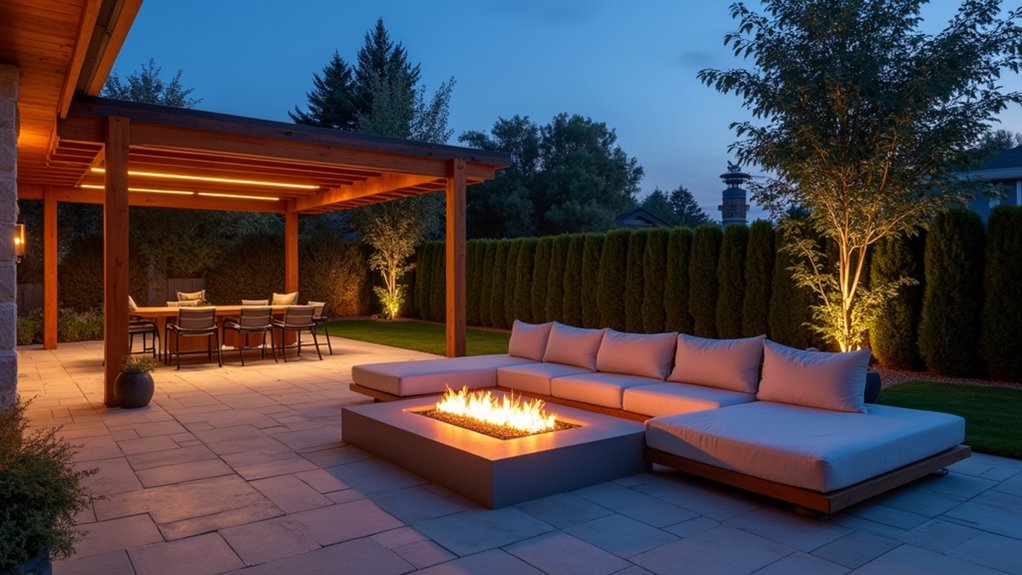
Effectively heating large outdoor spaces requires more than just installing powerful heaters—it demands thoughtful design that prevents heat from escaping. By strategically incorporating barriers, screens, and walls, you’ll create zones where warmth circulates rather than dissipating into the open air.
- Use Bromic’s complimentary 2D Heat Map service to identify optimal heater placement and ensure even coverage throughout your space
- Install wind-breaks alongside high-output heaters to protect against heat loss in breezy conditions
- Create strategic “comfort zones” over seating areas where heat retention elements maximize guest comfort
- Combine different heating technologies (electric, infrared, gas) with physical barriers to maintain consistent temperatures while optimizing energy efficiency
These structural elements work in concert with your heating system to create a comfortable microclimate even in expansive outdoor environments.
Consider Long-Term Operating Costs and Efficiency
When planning your outdoor heating strategy, looking beyond initial purchase costs to long-term operational expenses can save thousands over time. Fuel type dramatically impacts your budget—natural gas costs about $0.40 per hour for 200 square feet of heating, while propane runs approximately $8.00 per hour for the same coverage. Electric options fall between at roughly $0.88 hourly.
Your heating needs also determine efficiency. Short Wave High heaters provide immediate warmth with 90% radiant heat but consume more fuel. Long Wave Low options, with 40% radiant and 60% convection heat, take longer to warm up but may offer better efficiency for extended use.
Consider your site’s existing utilities—installing gas lines or upgrading electrical capacity adds significant costs. Always ensure your system complies with building codes and ventilation requirements.
Frequently Asked Questions
How to Make an Outdoor Space Warmer?
Position multiple infrared or propane heaters around your seating areas. You’ll get better coverage by combining freestanding units with mounted options. Don’t forget wind protection for maximum warmth retention.
What Is the Most Efficient Way to Heat a Large Space?
Use multiple high-BTU propane heaters strategically positioned throughout your space. You’ll maximize efficiency by integrating infrared technology to directly warm people rather than just heating surrounding air.
How to Make an Outdoor Space Warm in Winter?
Install multiple radiant heaters strategically across your patio. You’ll maximize warmth by combining short-wave and medium-wave options with smart controls to manage energy usage while keeping guests comfortable all winter.
How Long Will a 20 Lb Propane Tank Last in a Patio Heater?
Your 20 lb propane tank will last 10-12 hours on high (40,000 BTU/hr) or 20-25 hours on medium setting. Plan for 1-2 tanks daily for continuous overnight heating.

Leave a Reply