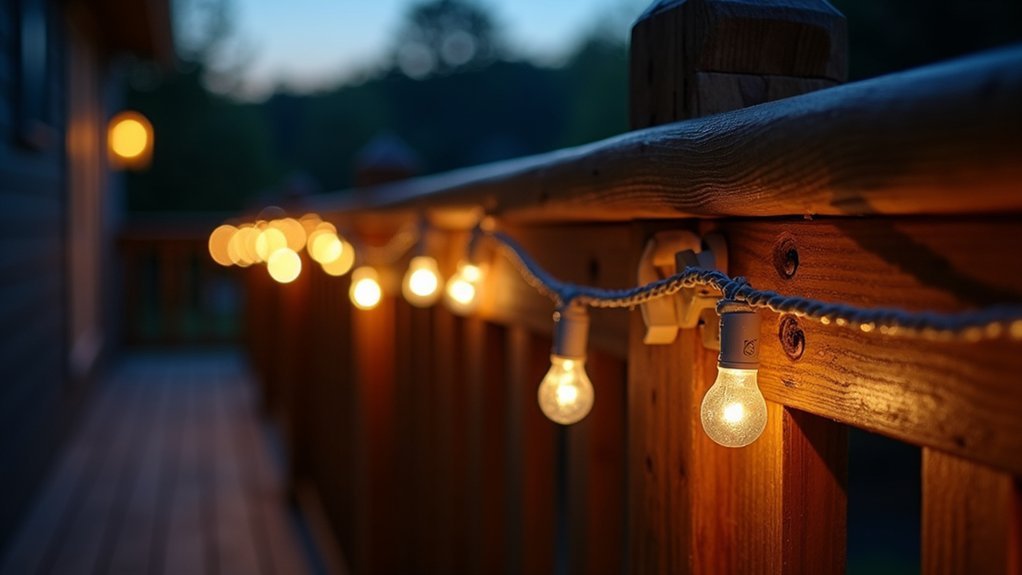
LED rope lights with an IP65 rating or higher are your best choice for deck railings. They’ll use up to 80% less energy than incandescent options and last 25,000 to 50,000 hours. You’ll want UV-stabilized jackets to prevent yellowing from sun exposure and a temperature tolerance between -40°F and 122°F. Look for trusted brands like Philips Hue for smart features or HitLights for commercial-grade durability. Below, you’ll find everything you need to choose the perfect option.
Understanding Rope Light Types for Outdoor Deck Applications
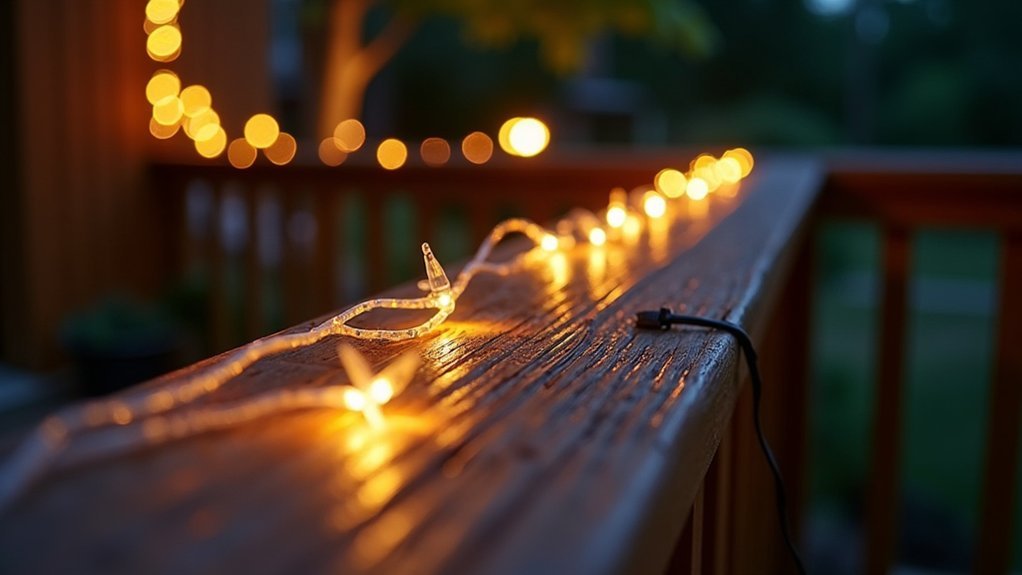
When you’re shopping for rope lights to illuminate your deck railings, you’ll encounter two main types: LED and incandescent. LED rope lights dominate the outdoor market because they consume up to 80% less energy, generate minimal heat, and last 25,000 to 50,000 hours. Incandescent options cost less upfront but burn out faster and run hotter.
You’ll also need to choose between 120-volt and 12-volt systems. Standard 120-volt lights plug directly into outdoor outlets, making installation straightforward. Low-voltage 12-volt options require a transformer but offer safer operation around moisture and curious hands.
For deck railings specifically, look for rope lights rated IP65 or higher. This rating guarantees your lights can withstand rain, snow, and temperature fluctuations without failing prematurely or creating safety hazards.
Weatherproof Ratings Every Deck Railing Rope Light Needs
You need to understand IP ratings before purchasing rope lights for your deck railings, as these standardized codes reveal exactly how well a product resists dust and water intrusion.
For outdoor deck installations, you’ll want a minimum IP65 rating, though IP67 or IP68 provides better protection against heavy rain and pooling water.
Beyond moisture resistance, check that your rope lights can handle UV exposure without fading and operate safely across your region’s temperature extremes.
Understanding IP Rating Systems
Since deck railing rope lights face constant exposure to rain, humidity, and temperature swings, understanding IP ratings isn’t just helpful—it’s essential for choosing products that’ll actually survive outdoors.
IP stands for “Ingress Protection,” and the two-digit code tells you exactly what threats your lights can handle. The first digit (0-6) indicates dust resistance, while the second digit (0-8) measures water protection.
For deck railings, you’ll want at least IP65-rated rope lights. This rating means complete dust protection and resistance to water jets from any direction.
If your deck sees heavy rainfall or you plan to mount lights where water pools, step up to IP67, which handles temporary submersion.
Don’t confuse water-resistant with waterproof—IP44 won’t cut it for exposed deck installations.
Minimum Rating for Outdoors
Although we’ve covered what IP ratings mean, let’s get specific about the exact numbers you should look for when shopping. For deck railing installations, you’ll need rope lights rated at minimum IP65 to handle outdoor conditions safely.
Here’s what each recommended rating protects against:
- IP65: Resists low-pressure water jets and complete dust protection
- IP66: Handles high-pressure water streams from any direction
- IP67: Survives temporary submersion up to one meter
- IP68: Withstands continuous submersion at specified depths
- IPX4: Offers only splash resistance—avoid this for deck use
You should always choose IP65 or higher for horizontal railing applications. If your deck faces harsh weather or coastal conditions, upgrade to IP67. Don’t compromise on this rating—lower numbers mean premature failure and potential electrical hazards.
UV and Temperature Resistance
Beyond water and dust protection, UV and temperature resistance determine whether your rope lights will last years or just months on your deck railing.
Direct sunlight breaks down inferior plastics, causing yellowing, brittleness, and cracking within a single season. Look for rope lights with UV-stabilized jackets or silicone tubing that won’t degrade under constant sun exposure.
Temperature tolerance matters equally. Your deck railing experiences extreme swings—scorching summer afternoons and freezing winter nights.
Quality outdoor rope lights handle ranges from -40°F to 122°F without dimming or failing.
Check manufacturer specifications for both UV rating and operating temperature range. Don’t assume “outdoor rated” covers these factors—many products meet water resistance standards but fail quickly under thermal stress or prolonged sun exposure.
LED Vs Incandescent Rope Lights for Railing Installations
When choosing rope lights for your deck railings, you’ll need to decide between LED and incandescent options. LED rope lights dominate the market for outdoor railing applications, and here’s why they’re the superior choice:
- Energy efficiency: LEDs use up to 80% less electricity than incandescent bulbs
- Lifespan: LED lights last 25,000-50,000 hours compared to incandescent’s 2,000-3,000 hours
- Heat output: LEDs run cool, reducing fire risk on wooden railings
- Durability: LED bulbs resist shock and vibration better than fragile incandescent filaments
- Brightness: LEDs maintain consistent illumination throughout their lifespan
Incandescent rope lights cost less upfront but require frequent replacement. They’re also becoming harder to find as manufacturers phase them out.
For deck railings exposed to weather and daily use, LEDs offer the best long-term value.
Choosing the Right Rope Light Length for Your Deck Perimeter
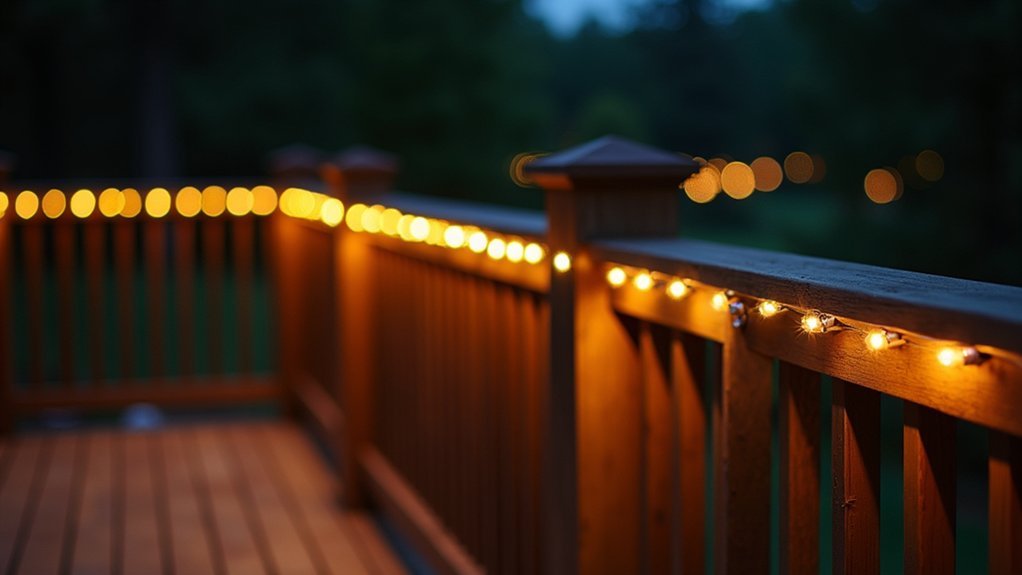
Measuring your deck’s perimeter accurately saves you from the frustration of running short or wasting money on excess rope lighting.
Start by measuring each railing section with a flexible tape measure, following curves and corners exactly as the lights will lay.
Trace every curve and corner with your tape measure—your rope lights will follow the exact same path.
Add these measurements together for your total length.
You’ll want to add 10-15% extra to your final measurement.
This buffer accounts for wrapping around posts, creating decorative loops, and reaching your power source.
Rope lights typically come in preset lengths like 18, 24, or 50 feet, so round up to the nearest available size.
Don’t forget to measure the distance from your starting point to the nearest outdoor outlet.
You may need extension cords or additional rope light segments to bridge that gap.
Color Temperature Options That Enhance Backyard Ambiance
The color temperature you select for your rope lights dramatically shapes your deck’s evening atmosphere.
Warm white lights (2700K-3000K) create a cozy, inviting glow that mimics candlelight and complements wooden railings beautifully. Cooler temperatures (4000K-5000K) deliver a crisp, modern look that works well with contemporary deck designs.
Consider these popular options for your outdoor space:
- 2700K warm white – relaxed, intimate gatherings
- 3000K soft white – versatile everyday illumination
- 4000K neutral white – clean, balanced brightness
- RGB color-changing – festive occasions and entertaining
- Amber tones – bug-resistant lighting that won’t attract insects
You’ll want to match your rope light color temperature to your deck’s primary use.
Entertainment spaces benefit from warmer tones, while task-oriented areas need brighter, cooler options.
Power Source Considerations for Deck Railing Rope Lights
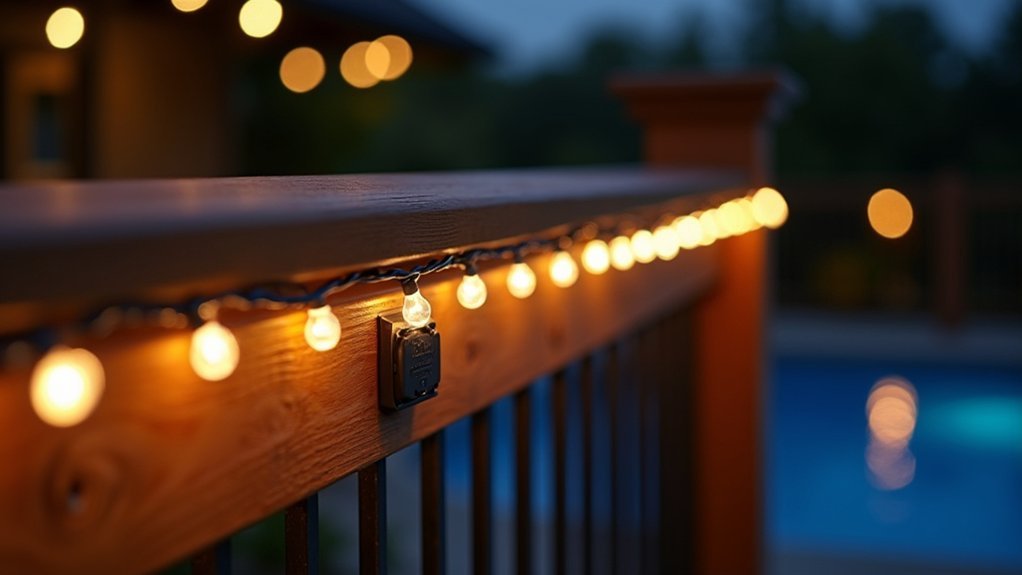
Choosing the right power source for your deck railing rope lights affects both installation complexity and long-term operating costs. You’ll find three main options: hardwired, plug-in, and solar-powered systems.
Hardwired rope lights connect directly to your home’s electrical system. They require professional installation but deliver consistent, reliable illumination without visible cords.
Plug-in options offer the easiest setup. You simply run the rope light to a nearby outdoor outlet. Make sure you’re using GFCI-protected outlets for safety in wet conditions.
Solar-powered rope lights eliminate electrical costs entirely. They work best on south-facing railings that receive six or more hours of direct sunlight. However, they may underperform during cloudy stretches or winter months.
Consider your deck’s layout, outlet accessibility, and maintenance preferences before selecting your power source.
Mounting Methods and Hardware for Secure Railing Installation
You’ll need reliable mounting hardware to keep your rope lights securely attached to your deck railings through wind, rain, and temperature changes.
Clip-on mounting systems offer the easiest installation since they simply snap onto your railing without tools or permanent modifications. If you prefer a sleeker look, adhesive track options create a clean channel that conceals the rope light while providing strong holding power on smooth surfaces.
Clip-On Mounting Systems
Snapping rope lights into place along your deck railing becomes effortless when you use clip-on mounting systems.
These plastic or metal clips grip your railing posts and balusters without requiring screws or permanent modifications.
You’ll appreciate how quickly you can install or remove your lights for seasonal changes or maintenance.
When selecting clip-on systems, consider these key features:
- Material durability – Choose UV-resistant plastic or stainless steel clips that withstand outdoor conditions
- Size compatibility – Match clip dimensions to your rope light diameter and railing width
- Spacing requirements – Install clips every 12 to 18 inches for secure support
- Color options – Select clips that blend with your railing finish
- Tool-free installation – Prioritize designs that snap on without additional hardware
Adhesive Track Options
When clip-on systems won’t work for your specific railing design, adhesive track options provide a reliable alternative that keeps your rope lights firmly in place. These mounting channels use industrial-strength 3M VHB tape or similar outdoor-rated adhesives that bond securely to wood, vinyl, composite, and metal surfaces.
Before applying adhesive tracks, you’ll need to clean your railings thoroughly with isopropyl alcohol to remove dirt, oils, and debris. Apply the track when temperatures exceed 50°F for peak adhesion. Press firmly for 30 seconds along the entire length.
Choose tracks with UV-resistant plastic housings to prevent yellowing and brittleness. Many adhesive channels feature snap-on covers that protect your rope lights from weather while allowing easy removal for bulb replacement or seasonal storage.
Solar-Powered Rope Lights for Energy-Efficient Deck Lighting
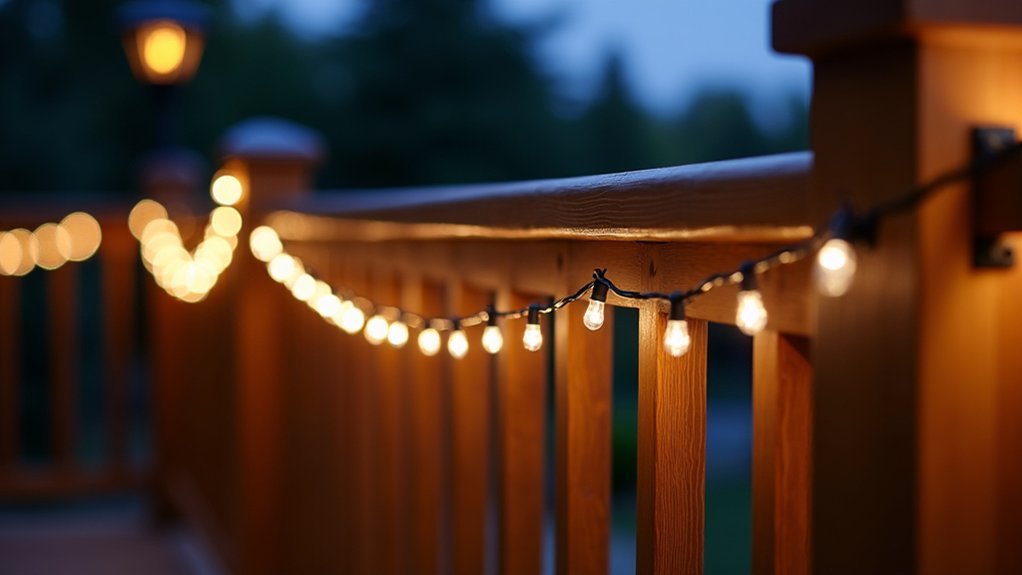
Solar-powered rope lights cut down on energy costs while providing attractive illumination for your deck railings. These lights harness sunlight during the day and automatically switch on at dusk, eliminating the need for electrical wiring or outlet access.
When selecting solar rope lights for your deck, consider these key features:
- Panel placement – Position solar panels where they’ll receive direct sunlight for 6-8 hours daily
- Battery capacity – Look for lights with lithium-ion batteries that hold charges longer
- Weather resistance – Choose IP65-rated options that withstand rain and humidity
- Light duration – Quality models provide 8-12 hours of illumination per charge
- Lumen output – Select 50-100 lumens per foot for visible ambient lighting
You’ll enjoy hassle-free installation since there’s no wiring required.
Smart Rope Lights With Remote and App Control Features
While solar options offer energy independence, smart rope lights take convenience a step further with remote and app control features that let you customize your deck’s ambiance from anywhere.
Smart rope lights let you control your deck’s ambiance from anywhere, combining convenience with customizable lighting at your fingertips.
You’ll find smart rope lights that connect to your home WiFi network, allowing you to adjust brightness, change colors, and set schedules through smartphone apps. Many models work with voice assistants like Alexa and Google Home, so you can control your deck lighting hands-free.
Remote-controlled options give you basic functionality without WiFi dependency. You can dim lights, cycle through color modes, and power them on or off from your couch or patio chair.
Look for smart rope lights with timer functions and scene presets. These features let you program automatic sunset activation or create specific lighting moods for entertaining guests.
Brightness Levels and Lumens for Outdoor Entertainment Spaces
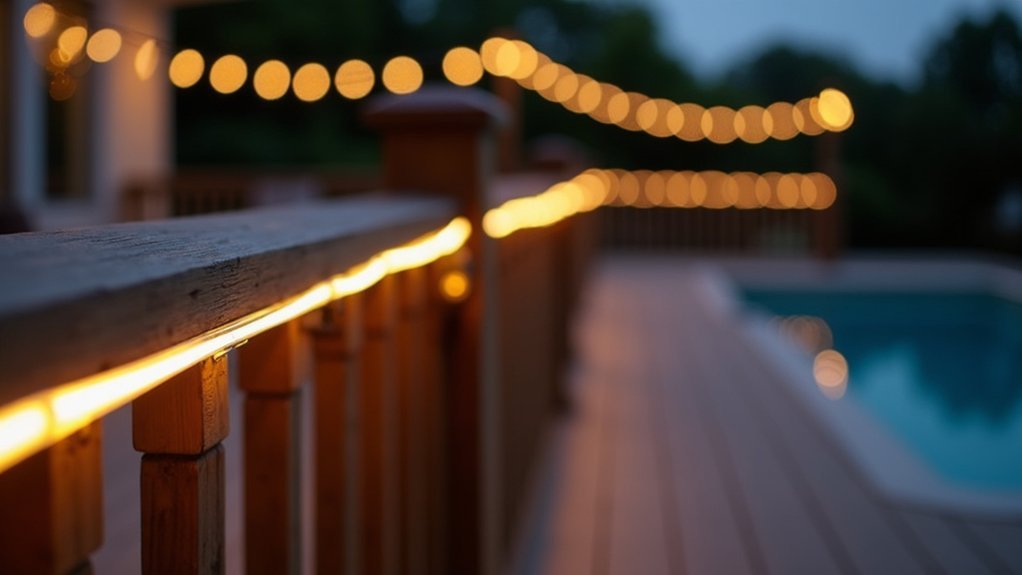
When selecting rope lights for your deck railings, you’ll want to take into account the ideal lumens per foot based on how you plan to use the space.
Most outdoor rope lights offer dimming options that let you adjust brightness levels to match the occasion, whether you’re hosting a lively party or enjoying a quiet evening.
Understanding the difference between ambient lighting for atmosphere and task lighting for activities like grilling or reading helps you choose the right brightness for your entertainment needs.
Ideal Lumens Per Foot
Selecting the right brightness level transforms your deck railing from a simple safety feature into an inviting outdoor entertainment space. You’ll want to match your lumens per foot to your specific needs, balancing visibility with ambiance.
For deck railings, consider these lumen guidelines:
- Ambient mood lighting: 1-2 lumens per foot creates a soft glow perfect for relaxed evenings
- Casual entertaining: 2-3 lumens per foot provides enough light for conversation areas
- Dining spaces: 3-4 lumens per foot lets guests see their food without harsh glare
- Task areas: 4-5 lumens per foot works well near grills or serving stations
- Safety zones: 5+ lumens per foot illuminates stairs and level changes
You can also install dimmable rope lights to adjust brightness based on the occasion.
Dimming Options Available
Because your outdoor lighting needs change throughout the evening, you’ll want to explore the dimming options that give you complete control over your deck’s atmosphere.
Modern rope lights offer several dimming technologies to match your entertainment needs:
| Dimming Type | Control Method | Best For |
|---|---|---|
| Inline Dimmer | Manual dial or switch | Budget-friendly setups |
| Remote Control | Wireless handheld device | Convenient adjustment |
| Smart App | Smartphone or voice | Advanced automation |
You’ll find that dimmable LED rope lights provide the most flexibility, letting you shift from bright task lighting during dinner prep to soft ambient glow for late-night conversations. Look for products specifically labeled as “dimmable” since not all rope lights support this feature. Compatible dimmer switches rated for LED use prevent flickering and guarantee smooth changes between brightness levels.
Ambient Vs Task Lighting
Understanding the difference between ambient and task lighting helps you select the right rope light brightness for your deck’s various zones. Ambient lighting creates a soft, overall glow that sets the mood for relaxation and socializing.
Task lighting delivers focused illumination for specific activities like grilling or reading.
For deck railings, you’ll typically want ambient lighting levels between 100-300 lumens per foot. This range provides enough visibility without creating harsh glare that disrupts your outdoor atmosphere.
Consider these brightness guidelines for your entertainment space:
- Use 100-150 lumens for subtle accent lighting along railings
- Choose 200-300 lumens for dining and conversation areas
- Install dimmable options to switch between ambient and functional modes
- Position brighter sections near stairs for safety
- Layer multiple brightness levels throughout your deck
Top-Rated Rope Light Brands for Deck Railing Projects
When you’re ready to invest in rope lights for your deck railings, choosing a reputable brand can make the difference between a product that lasts one season and one that performs reliably for years.
| Brand | Key Strength | Best For |
|---|---|---|
| Philips Hue | Smart home integration | Tech-savvy homeowners |
| Govee | Budget-friendly RGB options | Color customization |
| HitLights | Commercial-grade durability | Long-term installations |
You’ll find that Philips Hue offers seamless app control and voice activation through popular smart assistants. Govee provides excellent value with vibrant color options at accessible price points. HitLights stands out for professional-quality construction that withstands harsh weather conditions.
Before purchasing, verify that your chosen brand offers adequate waterproof ratings and warranties. Reading customer reviews specific to outdoor deck applications helps you avoid products that fail prematurely.
Maintenance Tips to Extend Your Rope Light Lifespan
Regularly cleaning your rope lights prevents dirt and debris from building up and dimming their brightness over time. Use a soft, damp cloth to wipe down the tubing monthly, and always disconnect power before cleaning. Inspect your lights seasonally for cracks, moisture intrusion, or damaged sections that could compromise performance.
A quick monthly wipe-down keeps your rope lights shining bright and extends their lifespan significantly.
Follow these essential maintenance practices:
- Store indoor-rated rope lights during harsh winter months to prevent weather damage
- Check all connections and mounting clips for looseness or corrosion
- Replace damaged sections immediately rather than running compromised lights
- Keep rope lights away from sharp edges that can puncture the tubing
- Avoid overloading electrical circuits by following manufacturer wattage guidelines
Proper care guarantees your deck lighting remains vibrant and functional for years to come.
Frequently Asked Questions
Can Rope Lights Be Safely Used on Composite or Vinyl Deck Railings?
Yes, you can safely use rope lights on composite or vinyl deck railings. You’ll want to choose LED rope lights since they produce minimal heat and won’t damage or warp your railing materials over time.
How Do I Hide the Power Cord Running to My Deck Railing Lights?
You can hide power cords by running them through hollow railing posts, tucking them beneath deck boards, or using paintable cord covers that match your railing color. Cable clips also secure cords discreetly along edges.
Will Rope Lights Attract Bugs to My Deck Area at Night?
Yes, rope lights can attract bugs, but you’ll minimize this by choosing warm white or yellow LED options. LEDs emit less heat and UV light than incandescent bulbs, making them less appealing to insects.
Can I Cut Rope Lights to Fit Around Railing Corners and Posts?
You can cut most rope lights, but only at designated cut marks spaced every 12-24 inches. You’ll need end caps to seal cut sections and prevent moisture damage. LED rope lights typically offer more cutting flexibility.
Do Rope Lights Get Hot Enough to Damage Wood Railings Over Time?
LED rope lights stay cool to the touch, so you won’t damage your wood railings over time. They generate minimal heat compared to incandescent options, making them safe for prolonged contact with wooden surfaces.

Leave a Reply