
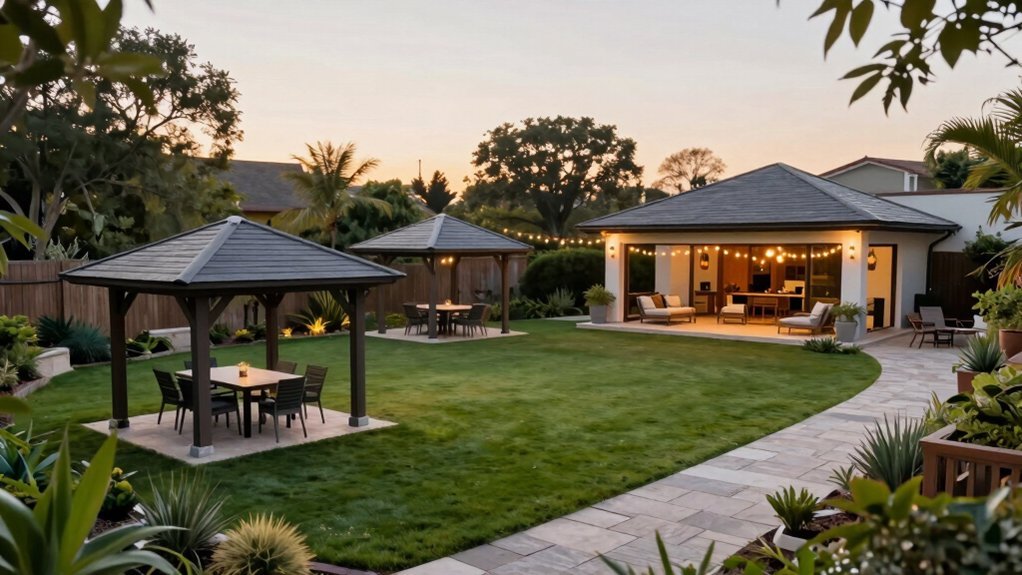
Start by measuring your yard’s footprint and setbacks, then pick a pavilion size that fits without crowding paths or sightlines. Consider how you’ll use the space—dining, lounging, or both—and plan for circulation around furniture. Reserve room for materials during installation and future landscaping. Choose a style that complements your home and blocks weather efficiently. Manufacturers offer 12×18 up to 24×40 options, with flexible shapes and add-ons to fit your needs. There’s more to learn today.
Assess Your Available Space
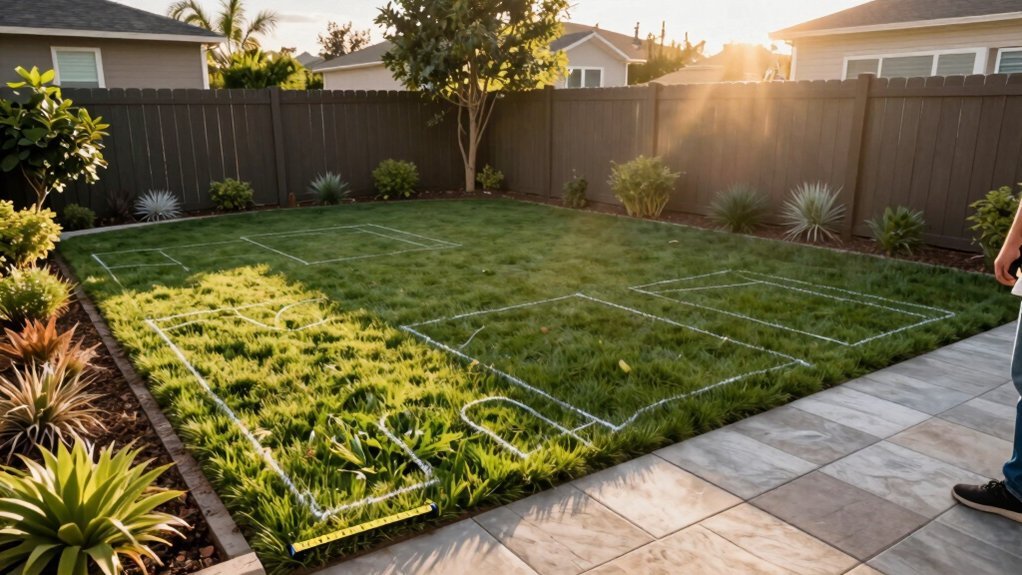
First, measure the ground area carefully to ensure the pavilion footprint fits practically. You’ll want to map the usable plot, noting setbacks from property lines and existing features. Check vertical space allowances too, so elevated roofs or embellishments won’t collide with eaves or wires. Leave room for construction materials and equipment during installation, and make sure you won’t block pathways or sightlines. As you assess, envision how people will move around the structure, adjusting footprint to keep traffic flowing without harming landscaping or nearby structures.
Choose a design that complements your property’s architectural style and boosts curb appeal, while still fitting within the available footprint. If you find tight spots, consider a narrower or staggered layout before committing. Measure, revise, and confirm before building.
Determine Your Intended Use
Think about how you’ll use the pavilion: will it host intimate family dinners or large social gatherings? You might want a tranquil retreat or a versatile outdoor room that supports different activities, so plan for flexible layouts and easy circulation. By outlining the primary purpose—dining versus lounging—you’ll gauge the needed space, comfort, and adaptability for future events.
Primary Pavilion Purpose
How you plan to use your pavilion should drive its size and layout—from intimate family dinners to large social gatherings. Establish how the pavilion will be used to guide sizing decisions. Consider planned activities around and beneath the pavilion to determine necessary open space and flow. Align pavilion function with desired outdoor ambiance and lifestyle goals for the backyard. Match the pavilion role to everyday relaxation as well as planned events to inform size and layout. Use the intended use to narrow product options and features, ensuring the design supports the primary activities.
- Define core activity: dining or lounging
- Plan circulation that avoids bottlenecks during gatherings
- Choose features to support primary uses
- Balance shade, light, and weather protection
- Align with your lifestyle goals backyard
Dining Vs Lounging Needs
Are you dining al fresco or lounging in the sun? Dining-focused pavilions need a larger footprint to support stable surfaces and clear circulation, with spaces around 11×13 to 13×15 for comfortable table and chair layouts. For banquet-style meals, plan at least 12 square feet per person for chairs and service movement, which shapes overall size. A dining pavilion should prioritize open space so you can move around tables, accommodate serving staff, and handle food trays without crowding.
Lounging pavilions benefit from flexible layouts and modular furniture, allowing smaller footprints like 11×11 to 12×14 while still delivering comfy seating zones. When sizing, think about future dining expansion or extra lounge furniture. Aim for a versatile footprint that supports intimate meals and small gatherings, and flexibility.
Capacity Needs
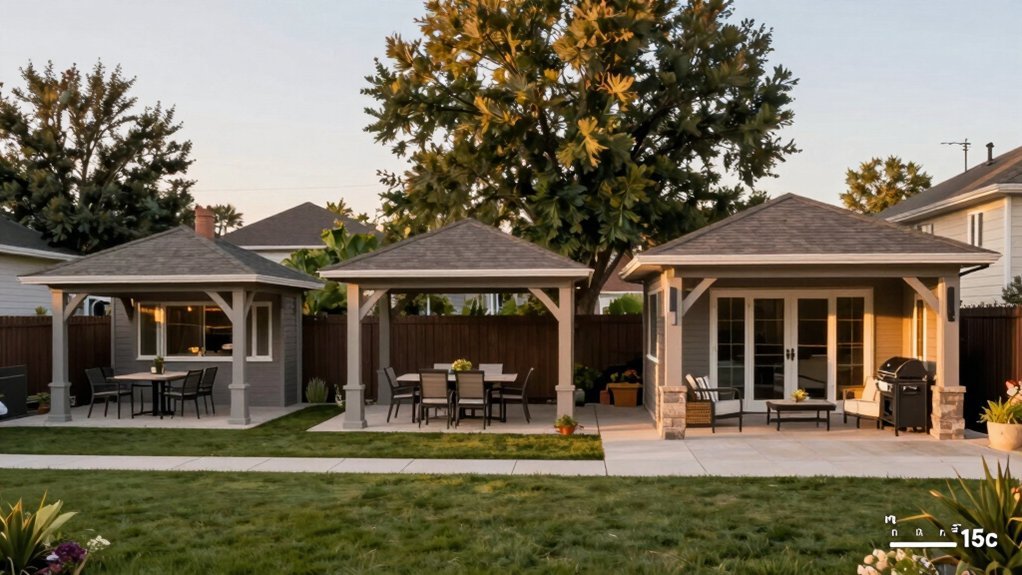
First, determine the maximum number of guests you’ll host and map seating to match the pavilion size. You’ll want a clear sense of flow, so estimate dining and social activities and arrange chairs, benches, and tables accordingly. If you expect frequent entertaining or events with a band or DJ, plan for a larger footprint and more flexible layouts. Balance daily relaxation with occasional gatherings, ensuring comfortable movement. Use capacity estimates to guide furniture layout, circulation paths, and any modular features.
- Determine seating density that matches the pavilion footprint
- Prioritize easy circulation around central gathering zones
- Allocate space for dining tables and lounge seating as needed
- Plan for flexible, modular furniture to adapt to events
- Align capacity with expected use and access for all and visitors
Activity Space Requirements
Think about dining surface planning by using stable, spacious areas sized to standard banquet tables (30 inches by 96 inches).
Ensure movement clearance of at least 12 square feet per person so chairs and service can flow, and keep layouts adaptable for formal or casual setups.
Choose modular, reconfigurable features that support dining, lounging, and small gatherings without crowding.
Dining Surface Planning
How do you ensure dining surfaces stay stable and spacious under your pavilion? Plan with sturdy, spacious setups that hold meals and service gear. Use standard banquet sizes—30 inches wide, 96 inches long—to gauge usable dining space, then allocate at least 12 square feet per person for chairs. Design should switch smoothly between formal dining and casual gatherings, so choose modular furniture and reconfigurable features. Keep edges clear, legs supported, and weight distribution balanced to prevent wobble. Prioritize alignment with shade, access, and traffic flow to preserve comfort during service today.
- Use 30×96 banquet panels as baseline.
- Allocate at least 12 sq ft per person.
- Choose modular, reconfigurable furniture options.
- Design surfaces to switch between formal and casual.
- Ensure stable legs and even weight.
Movement Clearance Needs
Do you have enough movement clearance around dining setups to keep service flowing and everyone comfortable? Plan for stable, spacious surfaces so servers can move smoothly between tables and chairs. Use standard banquet dimensions—30 inches wide by 96 inches long—to judge available space for placement and aisles. Allow at least 12 square feet per person for chairs and movement around the pavilion to prevent crowding. This isn’t just about fitting bodies, it’s about maintaining safe circulation as you transition from one service phase to another. Make the space adaptable for formal dining or casual setups. Favor modular furniture and reconfigurable features so you can reallocate footprint quickly without compromising flow. Consider clear pathways to entrances and service zones for dramatic improvements on busy events.
Versatile Layout Options
You’ll want versatile layout options that let you switch between formal dinners and casual gatherings without reworking the entire space. Plan for dining setups with stable surfaces and provide at least 12 square feet per person for chairs and service movement, so crowd flow stays comfortable. Use standard banquet table dimensions of 30 inches wide by 96 inches long to gauge pavilion floor area and spacing. Consider modular furniture and reconfigurable design features to enable easy transformation between formal and casual setups. Ensure the space adapts to different event types, from intimate dinners to larger gatherings, with airflow and weather in mind.
- Stable dining surfaces and flow
- 12 sq ft per guest minimum
- Banquet dimensions guide space
- Modular, reconfigurable furniture
- Climate and airflow considerations
Pavilion Style Variations
Where should you start when choosing pavilion style? Look at how the look matches your yard, home, and intended use.
Traditional or Grand Estate pavilions offer an orderly, classic vibe, while Alpine pavilions evoke rustic ski-lodge elements with clean lines, and Hampton pavilions provide a modern, elegant feel with a steeper roof slope. You can soften any style with rustic or country-inspired details to enhance charm and harmony with outdoor spaces.
Consider roof configurations—hip, gable, or double-tiered roofs—that influence aesthetics and airflow.
Try examples or visit show spaces to gauge appeal and fit, and compare how each style sits in your landscape. Align choices with surrounding architecture and landscape for a cohesive design. Your choice should feel natural, effortless, and well-suited for your yard.
Material and Maintenance Considerations
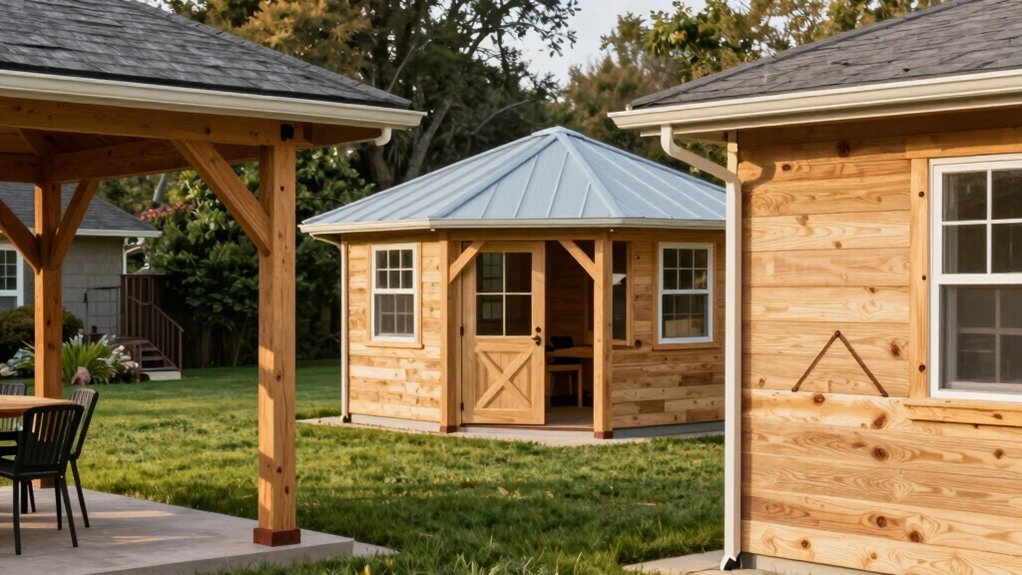
Once you’ve picked a style, the choice of materials will shape both upkeep and performance. You’ll get traditional appeal from wood pavilions with varied stain and paint options, while vinyl pavilions provide easy maintenance and a clean look. Cedar frames add texture and warmth, though they require treatment for longevity. Steel rooftops and powder-coated frames boost durability and resist cracking, rot, and weather damage. Composite materials blend high strength with a defined modulus, delivering long-term stability with less maintenance than pure wood.
- Vinyl is effortless to clean and maintain.
- Cedar brings texture but needs protective treatment.
- Steel rooftops deter cracking, rot, and weathering.
- Composite options offer stability with less upkeep than wood.
- Color choices typically stay white or ivory to reflect light.
Site Layout and Permissions
Start by measuring the ground area to confirm the pavilion footprint fits within property boundaries and setbacks.
Next, account for vertical space allowances when you’re considering elevated roofs or decorative elements that affect total height.
Allocate extra room for construction materials and equipment during installation to keep work areas clear and safe.
Ensure ample circulation around the pavilion so you don’t crowd paths and you maintain landscape access for maintenance.
Choose a design that complements your existing architectural style to boost curb appeal and cohesion with neighboring features.
Check local permits and HOA rules early, so approvals don’t slow your project.
Align layout with shade, drainage, and utilities to prevent surprises later.
Keep sightlines clear, preserve plant health, and document decisions for permits early.
Future Landscaping and Expansion
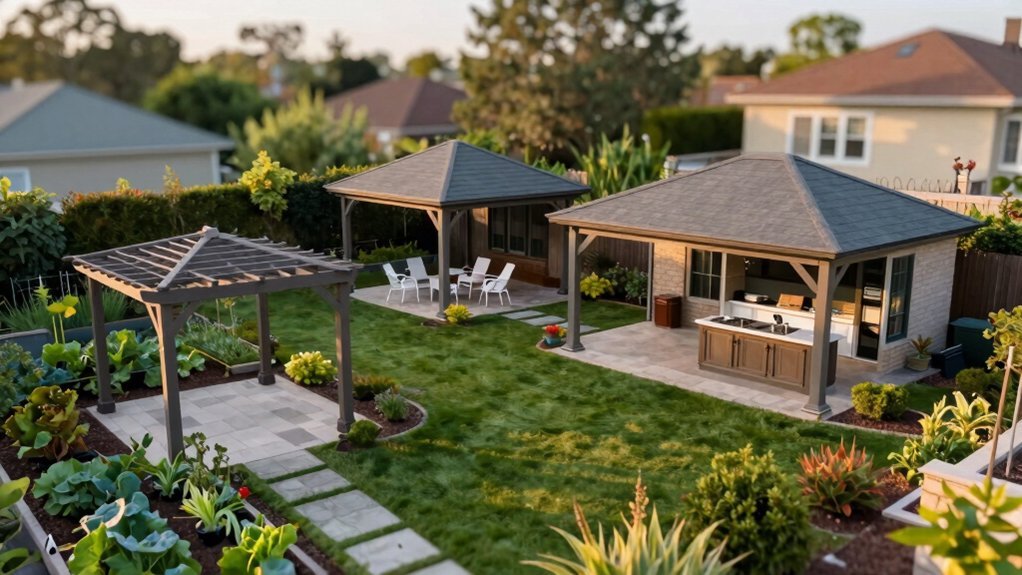
Looking ahead, how will your yard evolve around a pavilion to accommodate landscaping and potential expansion? You’ll want a footprint that fits growth, preserves trees and slopes, and keeps sightlines balanced as beds and hardscaping expand.
Consider drainage, sun exposure, and future seating zones so rebalance remains natural. Evaluate access routes from the house and alley, ensuring service vehicles won’t disrupt current design. Keep future-proofing simple and affordable for you.
- Plan for a modular design that enables easy enlargement and smart reconfiguration
- Size the footprint to comfortably accommodate future garden beds and paths
- Leave space for additional hardscaping, seating, and service zones without crowding
- Protect trees, slopes, and sightlines during expansion planning and inspections
- Reference typical backyards, like 11×13, to guide scale and proportion
Customization and Features for Flexibility
Customization lets you tailor the pavilion to your yard, size, and design goals. With Enduria Structures, you’ll shape the pavilion’s size, shape, and finish to fit your space and style, too. You can choose from 12×18 up to 24×40 pavilions, and options can be customized as needed. Roof and post choices—shingle or metal, traditional wood or steel frames—affect usable area and footprint. Overhangs, crown molding, and decorative side treatments adjust perceived space without changing the footprint. Optional features like cupolas, upgraded post designs, electrical packages, and privacy screens expand functionality and versatility, letting you adapt for gatherings, weather, or year-round use. By mixing finishes, shapes, and extras, you create a pavilion that grows with your needs and complements your landscape design without sacrificing cohesion overall.
Frequently Asked Questions
What Is a Good Size for a Backyard Pavilion?
A good size for a backyard pavilion is 11×13, it’s a fit for most yards, balances shade and movement, and leaves room for furniture; if you need space, consider 12×18, or 24×40 for entertaining areas.
How Much Does It Cost to Build a 20X20 Pavilion?
A 20×20 pavilion costs roughly $15,000 to $40,000, depending on materials, roofing, foundations, and features. You’ll pay more for premium finishes, higher wind-rated structures, and custom details like screens or built-ins. installation may add costs.
What’s the Difference Between a Pavilion and a Pergola?
A pavilion provides full, weather-protected space with a solid roof and enclosed sides, while a pergola offers open-air framing with little shade and no full roof. You gain privacy, weather shelter, and defined usable space.
How Big Can a Pavilion Be?
Pavilions can be as big as your yard allows, but you’ll want to leave space for movement and furniture; most yards fit about 11×13 feet, though larger, reinforced builds are possible with custom designs options.

Leave a Reply