

The three best pool deck materials are concrete, natural stone, and composite or wood decking. Concrete offers the most budget-friendly option at $6–$15 per square foot with 25+ years of durability. Natural stone like travertine or flagstone costs more upfront but lasts 50–75 years and boosts your home’s resale value. Composite and wood decking deliver warmth and comfort underfoot but require different maintenance levels. Each material has distinct trade-offs worth exploring below.
Concrete Pool Decks: Durability, Cost, and Design Options

When you’re weighing pool deck options, concrete stands out as one of the most versatile and budget-friendly choices available. You’ll typically pay between $6 and $15 per square foot for basic poured concrete, making it accessible for most budgets.
Concrete delivers exceptional durability, lasting 25 years or more with proper maintenance. It resists cracking, fading, and heavy foot traffic when sealed correctly. You’ll need to reseal every two to three years to maintain its protective barrier.
Design options have expanded dramatically. You can choose stamped patterns that mimic natural stone, brick, or tile. Colored stains and dyes let you customize the appearance to match your home’s exterior. Exposed aggregate adds texture and slip resistance around wet areas. Broom-finished concrete provides a classic, non-slip surface at minimal cost.
Natural Stone Pool Decks: Aesthetic Appeal and Long-Term Value
Although natural stone costs more upfront than concrete or pavers, it delivers unmatched beauty and can markedly boost your property’s resale value. You’ll find each piece offers unique coloring and texture, creating a one-of-a-kind outdoor space.
| Stone Type | Cost per Sq Ft | Lifespan |
|---|---|---|
| Travertine | $15-$30 | 50+ years |
| Flagstone | $18-$35 | 75+ years |
| Limestone | $12-$25 | 50+ years |
Natural stone stays cool underfoot, making it comfortable during hot summer days. You won’t need to worry about fading since the color runs throughout the material. With proper sealing every two to three years, your stone deck will maintain its elegance for decades.
Composite and Wood Pool Decks: Comfort and Maintenance Considerations
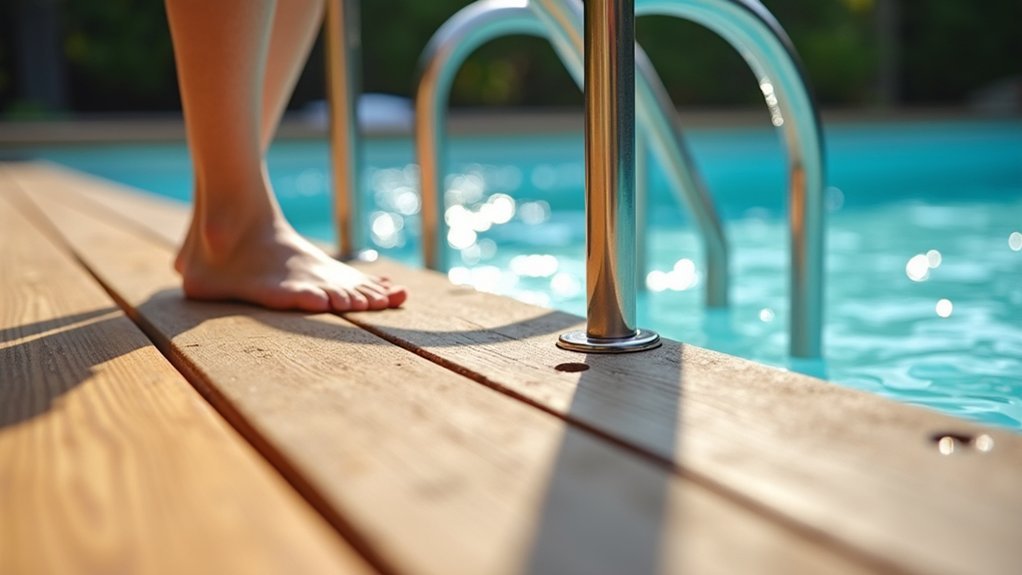
Moving beyond stone options, composite and wood decking materials offer a warm, inviting aesthetic that many homeowners prefer for their pool surroundings. These materials stay cooler underfoot than concrete or pavers, making barefoot walks comfortable even on hot days.
Natural wood like ipe, cedar, or redwood creates stunning visual appeal but demands regular sealing, staining, and inspection for rot or splinters. You’ll need to commit to annual maintenance to preserve its beauty and structural integrity.
Composite decking provides a lower-maintenance alternative. It resists fading, staining, and moisture damage while mimicking wood’s appearance. You won’t deal with splinters or annual refinishing, though composites can retain more heat than natural wood.
Both options require proper drainage and ventilation underneath to prevent moisture buildup and extend your deck’s lifespan.
Frequently Asked Questions
How Far Should a Pool Deck Extend From the Pool Edge?
You should extend your pool deck at least 4 feet from the pool edge, though 6 to 10 feet provides better functionality. This gives you enough space for lounging, walking safely, and placing furniture.
Can Pool Deck Materials Be Installed Over Existing Surfaces?
Yes, you can install many pool deck materials over existing surfaces. You’ll find pavers, rubber tiles, and concrete overlays work well for covering old concrete, saving you demolition costs while revitalizing your pool area’s appearance.
What Pool Deck Colors Help Keep Surfaces Coolest in Summer?
You’ll want light colors like beige, tan, sandstone, or light gray to keep your pool deck coolest. These shades reflect sunlight rather than absorbing heat, making barefoot walking much more comfortable during hot summer days.
Do I Need Permits to Build a Pool Deck?
You’ll typically need permits for pool deck construction, especially if it’s attached to your home or exceeds certain size thresholds. Check with your local building department first—requirements vary considerably by municipality and project scope.
How Do Different Pool Deck Materials Affect Home Resale Value?
You’ll boost your home’s resale value most with natural stone or travertine decks, as buyers perceive them as premium upgrades. Stamped concrete offers moderate value, while basic poured concrete won’t markedly impact your selling price.


Leave a Reply