
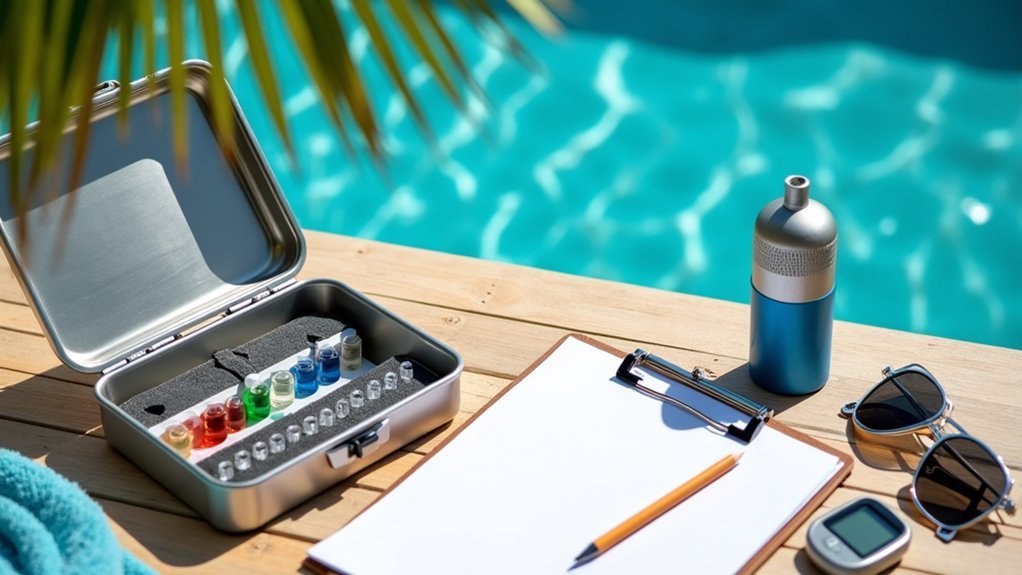
A solid weekly pool water testing schedule starts with Monday morning chlorine and pH checks after weekend swimming, followed by midweek alkalinity and calcium hardness testing around Wednesday. You’ll want to perform thorough analysis on weekends for slower-changing parameters like cyanuric acid and total dissolved solids. During summer, you should test two to three times weekly, while winter requires only weekly or biweekly checks. Below, you’ll find exactly how to customize this schedule for your specific pool.
Understanding Your Pool’s Water Chemistry Basics
When you’re responsible for maintaining a pool, understanding water chemistry becomes essential to keeping swimmers safe and your equipment in good condition. Your pool’s water contains a delicate balance of chemicals that work together to prevent algae growth, kill harmful bacteria, and protect your investment.
The key parameters you’ll monitor include pH levels, chlorine concentration, total alkalinity, and calcium hardness. Each factor affects the others, creating a system that requires regular attention. If your pH drifts too high, chlorine loses its sanitizing power. When alkalinity drops, your pH becomes unstable and difficult to control.
You don’t need a chemistry degree to master these concepts. With consistent testing and basic knowledge of how these elements interact, you’ll maintain crystal-clear water throughout the swimming season.
Essential Testing Equipment and Supplies You Need
Before you plunge into your testing routine, you’ll need to stock up on the right equipment to get accurate readings. Your basic toolkit should include test strips or a liquid test kit, which measures chlorine, pH, alkalinity, and cyanuric acid levels.
Test strips offer convenience and quick results, making them ideal for daily checks. Liquid test kits provide greater accuracy and are better suited for weekly thorough testing. Consider investing in a digital tester if you want precise measurements without color-matching guesswork.
You’ll also need clean collection containers, a logbook for tracking results, and fresh reagents that haven’t expired. Store all supplies in a cool, dry place away from direct sunlight. Replace test strips and reagents annually to guarantee reliable readings throughout the swimming season.
Daily Visual Inspections Before Testing
Your testing equipment gives you the numbers, but your eyes tell the first part of the story every day. Before you reach for test strips or reagents, take two minutes to scan your pool’s condition. Visual cues often reveal problems before chemical tests confirm them.
Check these three indicators during your daily inspection:
- Water clarity – Crystal-clear water suggests balanced chemistry, while cloudiness signals potential issues with filtration, pH, or sanitizer levels.
- Surface debris – Leaves, insects, and organic matter increase chlorine demand and affect test accuracy.
- Waterline appearance – Scum lines or discoloration indicate oil buildup or mineral deposits requiring attention.
Document anything unusual before testing. This context helps you interpret results accurately and spot developing trends.
Monday Morning Chlorine and Ph Level Checks
Monday mornings consistently set the tone for your pool’s weekly maintenance cycle.
After weekend swimming activity, your water chemistry has likely shifted markedly. Testing chlorine and pH levels first thing Monday allows you to address imbalances before they escalate into algae growth or equipment damage.
Grab your test kit and collect a water sample from elbow depth, away from return jets. Your chlorine should read between 1-3 ppm, while pH needs to fall within 7.2-7.6.
If chlorine drops below ideal levels, add shock treatment immediately. For pH adjustments, use pH increaser or decreaser based on your readings.
Document your results in a maintenance log. This creates a baseline pattern you’ll reference throughout the week, helping you predict your pool’s behavior and adjust treatments proactively.
Midweek Alkalinity and Calcium Hardness Testing
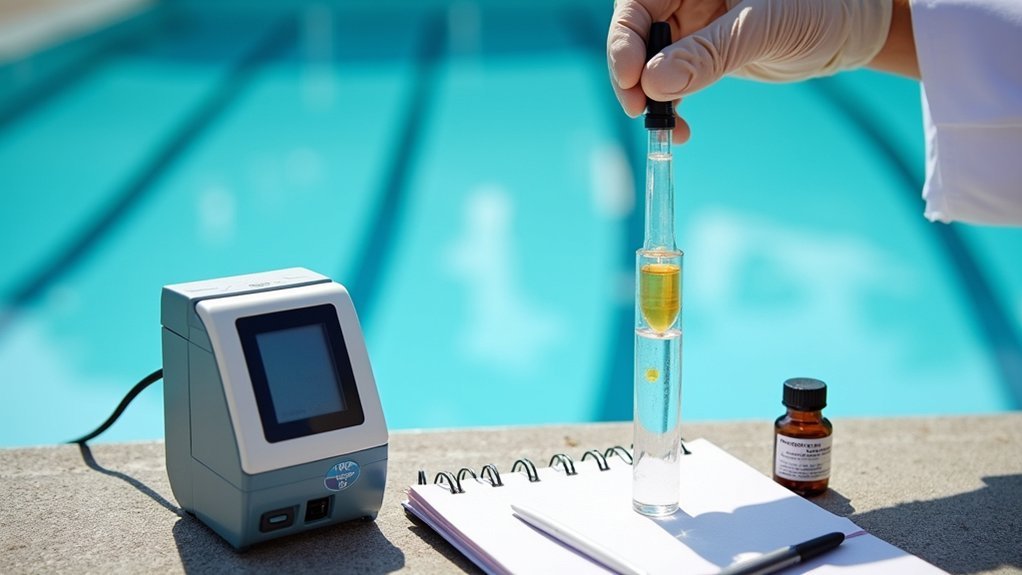
By Wednesday, your pool’s alkalinity and calcium hardness levels need attention since these parameters shift more gradually than chlorine and pH.
You’ll want to use a quality liquid test kit or digital meter for the most accurate readings, as test strips often lack precision for these measurements.
Testing midweek gives you time to make adjustments before weekend swimming while catching any developing imbalances early.
Why Test Midweek
Testing your pool’s alkalinity and calcium hardness midweek allows you to catch chemical imbalances before they become serious problems.
By Wednesday or Thursday, you’ve accumulated enough data from weekend treatments to assess how your water chemistry has stabilized.
Here’s why midweek testing matters:
- Early detection – You’ll spot drifting levels before they damage equipment or irritate swimmers’ skin and eyes.
- Adjustment time – You’ll have two to three days to correct any issues before heavy weekend use begins.
- Cost savings – You’ll prevent expensive repairs caused by prolonged exposure to corrosive or scale-forming water conditions.
Don’t skip this vital checkpoint.
Your pool’s alkalinity directly affects pH stability, while calcium hardness protects your surfaces and equipment from deterioration.
Consistent midweek monitoring keeps your water balanced and swim-ready.
Optimal Testing Methods
Accurate results depend entirely on choosing the right testing method for your midweek checks. Liquid reagent test kits offer the most precise readings for alkalinity and calcium hardness. They’re more reliable than test strips when measuring these specific parameters.
For alkalinity testing, use a titration-based kit that changes color as you add drops. Count each drop carefully until the color shifts completely. This method detects subtle changes that strips often miss.
Calcium hardness requires a similar titration approach. You’ll add reagent drops until the sample shifts from pink to blue. Digital meters exist but aren’t cost-effective for residential pools.
Always test water samples taken from elbow depth, away from return jets. Rinse your testing vials with pool water before collecting your sample to prevent contamination.
Weekend Comprehensive Water Analysis
While daily testing covers the basics, your weekend thorough water analysis dives deeper into your pool’s chemistry. Set aside time each Saturday or Sunday to examine parameters that don’t fluctuate as rapidly but still impact water quality and swimmer comfort.
During your weekend session, test these three critical levels:
- Calcium hardness – Maintain 200-400 ppm to prevent scaling or surface etching
- Cyanuric acid – Keep between 30-50 ppm to protect chlorine from UV degradation
- Total dissolved solids – Monitor levels below 1,500 ppm above your source water
You’ll also want to check total alkalinity, which buffers pH changes throughout the week.
Record all results in a log to track trends and catch developing issues before they become costly problems.
Tracking and Recording Your Test Results
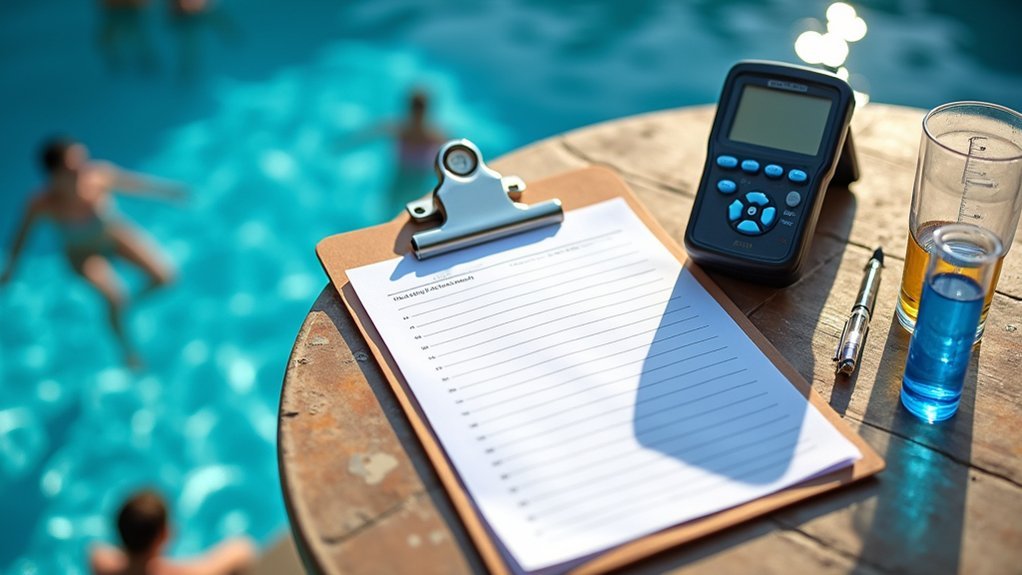
Recording your test results transforms random data points into actionable intelligence about your pool’s health. You’ll spot patterns that reveal underlying issues before they become expensive problems.
Create a simple logbook or use a smartphone app to track each reading. Document the date, time, weather conditions, and all chemical levels including pH, chlorine, alkalinity, and calcium hardness. Note any chemicals you’ve added and their quantities.
Review your entries weekly to identify trends. You might notice pH consistently dropping after heavy rain or chlorine depleting faster during hot spells. This information helps you anticipate adjustments rather than constantly reacting to imbalances.
Keep your records for at least one full season. Next year, you’ll have a reliable reference for handling similar conditions efficiently.
Adjusting Chemical Levels Based on Test Readings
Once you’ve identified imbalances through testing, you’ll need to act quickly to restore proper water chemistry. Your test results serve as a roadmap for which chemicals to add and in what quantities.
Follow these essential steps when adjusting chemical levels:
- Address pH first – pH affects how other chemicals work, so correct it before adjusting anything else. Add pH increaser or decreaser in small doses, waiting four hours between applications.
- Adjust alkalinity second – Total alkalinity buffers your pH, keeping it stable. Use sodium bicarbonate to raise it or muriatic acid to lower it.
- Balance sanitizer last – Once pH and alkalinity are correct, adjust your chlorine or other sanitizer levels for maximum effectiveness.
Always add chemicals with the pump running and retest after 24 hours.
Seasonal Variations in Testing Frequency
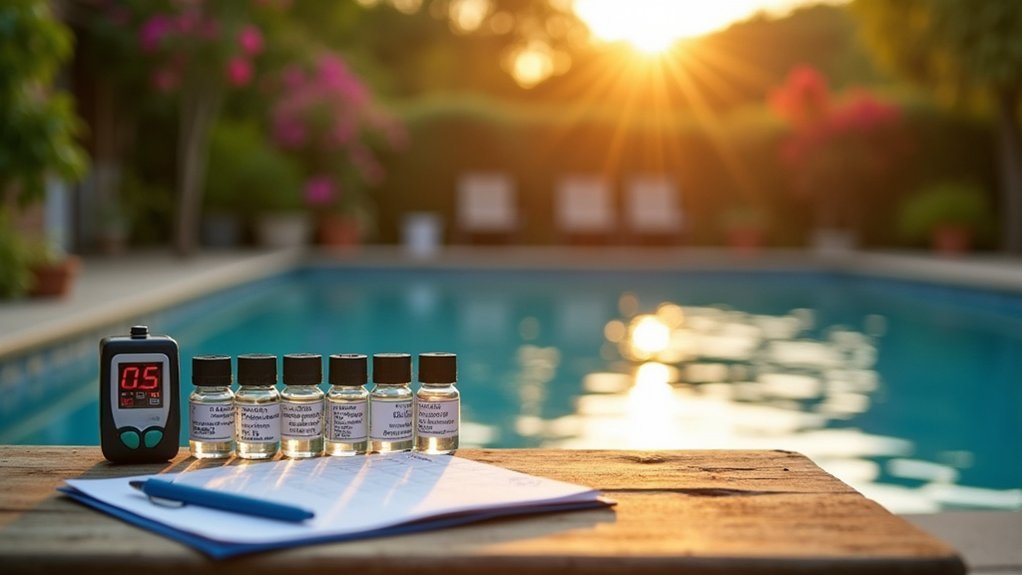
Because swimming pool chemistry responds directly to environmental conditions, your testing schedule shouldn’t remain static throughout the year. Temperature, rainfall, and usage patterns all affect how quickly your water chemistry shifts.
During summer months, you’ll need to test more frequently due to increased swimmer loads and higher temperatures that accelerate chlorine breakdown. Winter months allow for reduced testing since most pools see minimal use.
| Season | Recommended Testing Frequency |
|---|---|
| Summer | 2-3 times weekly |
| Fall | 1-2 times weekly |
| Winter | Weekly or bi-weekly |
| Spring | 2 times weekly |
You should also increase testing after heavy rainstorms, pool parties, or extreme heat waves. These events can dramatically alter your water balance within hours.
Signs Your Water Needs Immediate Attention
While regular testing schedules help you maintain balanced pool water, certain warning signs demand your immediate attention regardless of when you last checked your levels. Don’t wait for your next scheduled test if you notice these problems.
Your pool sends warning signals—ignoring them turns minor imbalances into major problems requiring costly intervention.
3 Signs Requiring Immediate Testing:
- Cloudy or murky water – This indicates filtration issues, algae growth, or chemical imbalances that can worsen within hours.
- Strong chlorine smell – Contrary to popular belief, this signals insufficient chlorine, not excess. Chloramines form when chlorine binds with contaminants.
- Eye or skin irritation – Swimmers experiencing burning eyes or itchy skin suggest pH levels have drifted outside the safe 7.2-7.6 range.
When you spot these warning signs, test immediately and adjust chemicals before allowing anyone to swim.
Common Testing Mistakes Pool Owners Make
Knowing when to test your pool water matters, but how you test matters just as much. Many pool owners dip their test strips too quickly or shake off excess water before reading results, which skews accuracy.
You’re also making a mistake if you test immediately after adding chemicals. Wait at least four hours with the pump running to allow proper circulation. Testing in direct sunlight degrades reagents and strips, giving you false readings.
Don’t store your testing supplies in the pool shed where temperatures fluctuate wildly. Heat and humidity destroy chemical reagents faster than you’d expect. Replace test strips every season, even if you haven’t used them all.
Finally, avoid testing with wet hands. Contamination from sunscreen, sweat, or lotions corrupts your samples instantly.
When to Use Professional Water Testing Services
While home test kits handle routine monitoring, certain situations call for professional water analysis.
You should seek expert testing when you’re dealing with complex chemical imbalances that won’t resolve despite your best efforts, during seasonal pool opening to establish accurate baseline readings, or when facing persistent water problems like recurring algae or cloudy water.
Professional labs can detect issues your standard test strips might miss, helping you identify the root cause of stubborn problems.
Complex Chemical Imbalances
Even though home test kits handle most routine monitoring, certain situations call for professional water analysis at your local pool store or through a certified laboratory.
Complex chemical imbalances often involve multiple interconnected factors that standard test strips can’t accurately diagnose. When you’ve tried adjusting chemicals repeatedly without success, professional testing reveals hidden issues.
Seek professional analysis when you encounter:
- Persistent cloudy water despite balanced chlorine and pH readings
- Recurring algae growth that resists normal treatment protocols
- Unusual water discoloration or metallic staining on pool surfaces
Professionals use advanced equipment to measure total dissolved solids, cyanuric acid saturation, and metal concentrations. They’ll provide specific treatment recommendations based on your pool’s exact conditions, saving you money on unnecessary chemical additions.
Seasonal Pool Opening
Opening your pool after winter hibernation presents unique testing challenges that justify a professional assessment.
Stagnant water accumulates contaminants, debris breakdown products, and potential metal deposits that standard home test kits can’t accurately measure. A professional lab analysis identifies hidden issues before they damage equipment or surfaces.
You’ll want professional testing to establish accurate baseline readings for total dissolved solids, copper, iron, and phosphate levels. These factors greatly impact your treatment strategy for the coming season.
Schedule your professional test within the first week of removing your winter cover. Bring a water sample to your local pool store or use a mail-in service for thorough results. This single investment prevents costly mistakes from treating problems you’ve incorrectly diagnosed with basic testing strips.
Persistent Water Problems
Seasonal openings aren’t the only times you’ll benefit from professional water analysis.
When your home testing shows normal levels but problems persist, it’s time to seek expert help. Professional labs detect issues your standard kit can’t identify.
Consider professional testing when you encounter:
- Recurring algae blooms that return within days despite proper shocking and algaecide treatment
- Persistent cloudiness that doesn’t clear after balancing chemicals and running your filter continuously
- Unexplained skin or eye irritation even when chlorine and pH levels test within acceptable ranges
These stubborn issues often indicate underlying problems like phosphate contamination, copper presence, or total dissolved solids buildup.
Professional analysis pinpoints the exact cause, saving you money on ineffective chemical treatments and preventing ongoing frustration.
Creating a Customized Testing Calendar for Your Pool
Regularly testing your pool water prevents problems before they spiral into costly repairs or health hazards, but a one-size-fits-all schedule doesn’t account for your pool’s unique characteristics.
Start by evaluating your pool’s specific needs. High-traffic pools require more frequent chlorine checks—daily rather than twice weekly. Pools surrounded by trees need additional pH testing after storms deposit debris. Saltwater systems demand weekly salinity monitoring.
Build your calendar around these factors:
- Daily: Check chlorine and pH if you swim frequently
- Twice weekly: Test alkalinity and sanitizer levels
- Weekly: Measure calcium hardness and stabilizer
- Monthly: Conduct thorough water analysis
Mark testing days on your phone or physical calendar. Set reminders for seasonal adjustments—you’ll test more often during summer’s peak usage and less during winter months.
Maintaining Consistent Water Quality Year-Round
You’ll need to adjust your testing frequency as the seasons change, increasing checks during peak summer use and reducing them when temperatures drop.
Weather events like heavy rain, intense heat, and windstorms can quickly throw your water chemistry out of balance, requiring immediate attention.
Even during the off-season, you shouldn’t neglect your pool entirely—consistent maintenance prevents costly problems when you’re ready to swim again.
Seasonal Testing Frequency Adjustments
As weather patterns shift throughout the year, your pool’s testing needs change dramatically from season to season.
During peak summer months, you’ll need to test chlorine and pH levels daily due to increased swimmer load and UV degradation. In contrast, winter months require only weekly checks if you’re maintaining a covered pool.
Here’s your seasonal testing breakdown:
- Summer (peak use): Test chlorine, pH, and alkalinity 2-3 times weekly; check cyanuric acid monthly
- Spring/Fall (transitional): Test all parameters weekly; monitor phosphates as leaves accumulate
- Winter (minimal use): Conduct weekly basic tests; perform thorough analysis monthly
Don’t forget that temperature fluctuations affect chemical efficacy. Warmer water accelerates chlorine consumption, while cooler temperatures slow bacterial growth but can alter pH stability.
Weather Impact on Chemistry
Weather conditions directly influence your pool’s chemical balance in ways that extend far beyond simple temperature changes. Heavy rainfall dilutes sanitizer levels and alters pH, while intense sunlight accelerates chlorine degradation by up to 90% within two hours. Wind introduces debris, pollen, and contaminants that increase chlorine demand.
You’ll need to test immediately after significant weather events rather than waiting for your regular schedule. Thunderstorms require pH and alkalinity checks since rainwater is naturally acidic. Heat waves demand daily chlorine monitoring because warm water promotes faster bacterial growth and chemical breakdown.
Humidity affects evaporation rates, concentrating minerals and raising calcium hardness over time. During extreme weather periods, increase your testing frequency to every other day. This proactive approach prevents minor imbalances from becoming costly problems.
Off-Season Maintenance Tips
Even though pool season may wind down, your water chemistry doesn’t take a break during cooler months. You’ll still need to monitor and adjust your water to prevent algae growth, staining, and equipment damage that can occur when pools sit neglected.
During the off-season, reduce your testing frequency to biweekly or monthly intervals. Focus on maintaining proper chemical balance to protect your pool’s surfaces and equipment.
Follow these essential off-season maintenance steps:
- Keep your pH between 7.2-7.6 to prevent corrosion and scale buildup on pool surfaces.
- Maintain chlorine levels at 1-3 ppm, even with a winter cover installed.
- Run your pump for 4-6 hours daily to ensure proper circulation and filtration.
Don’t skip winterization treatments—they’ll save you significant cleanup work come spring.
Frequently Asked Questions
Can I Use Pool Test Strips After Their Expiration Date?
You shouldn’t use expired pool test strips. They’ll give you inaccurate readings because the chemicals degrade over time. You’d risk improper water balance, which can lead to algae growth, skin irritation, or equipment damage. Replace them regularly.
How Long Should I Wait to Test Water After Swimming?
You should wait at least 30 minutes after swimming before testing your pool water. This gives chemicals time to circulate and provides accurate readings that aren’t affected by recently introduced body oils or contaminants.
Does Rainwater Significantly Affect My Pool’s Chemical Balance?
Yes, rainwater markedly affects your pool’s chemical balance. It dilutes chlorine levels, lowers pH, and introduces contaminants like dirt and debris. You’ll want to test and rebalance your water after any heavy rainfall.
Are Digital Pool Testers More Accurate Than Liquid Test Kits?
You’ll find digital testers offer greater precision and easier readings than liquid kits. They eliminate color-matching guesswork, but you’ll need to calibrate them regularly and replace probes periodically to maintain their accuracy advantage.
How Do Nearby Trees and Landscaping Impact My Water Testing Needs?
Nearby trees and landscaping increase debris, pollen, and organic matter in your pool. You’ll need to test more frequently—at least twice weekly—since these contaminants affect pH levels, chlorine demand, and can promote algae growth.



Leave a Reply