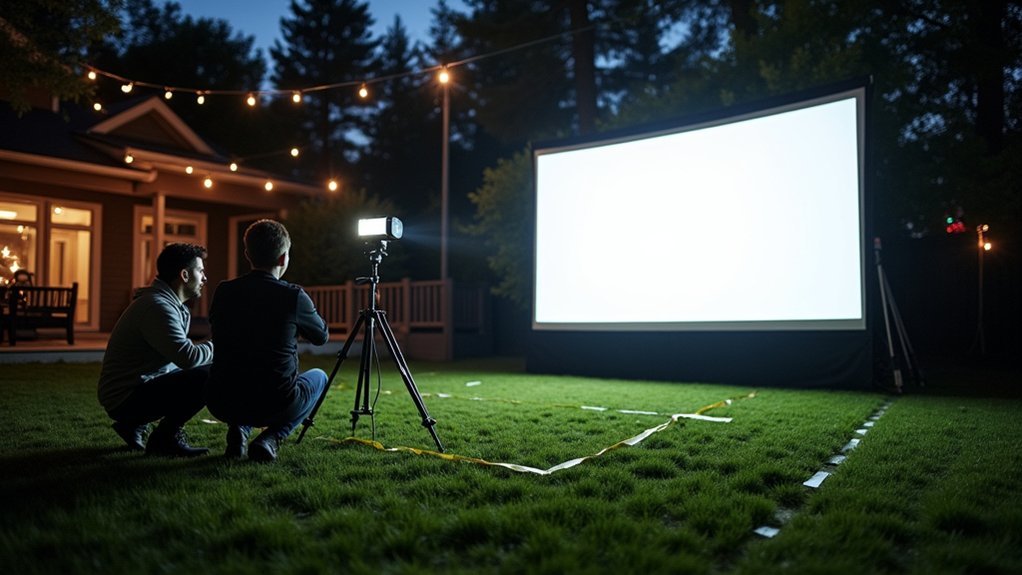
To set up your outdoor projector distance correctly, start by calculating your throw ratio—divide the distance from your projector to the screen by your desired screen width. Most standard projectors work best with a 1.5:1 to 2.5:1 ratio. You’ll also want to account for ambient light, position the lens at screen center height, and leave space for seating and foot traffic. Each of these factors plays a key role in your final setup.
Calculate Your Throw Ratio for Perfect Screen Coverage
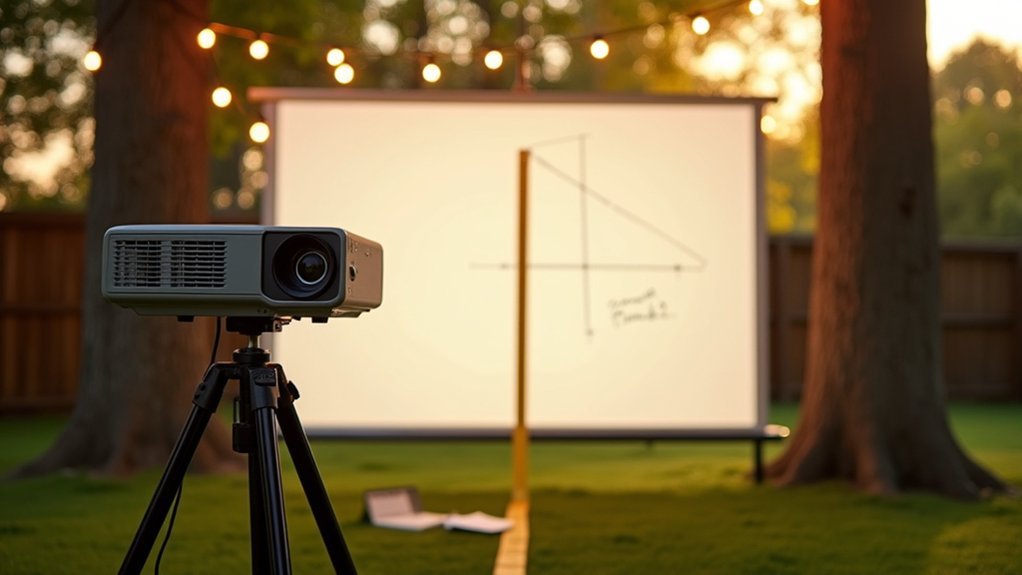
Have you ever set up a projector only to find the image either spills past your screen edges or leaves you squinting at a tiny picture? Your throw ratio solves this problem instantly.
To calculate it, divide the projector’s distance from the screen by the screen’s width. For example, if you’re placing your projector 12 feet away and want a 6-foot-wide image, your throw ratio is 2:1.
Check your projector’s specifications for its native throw ratio range. Short-throw projectors typically have ratios below 1:1, while standard projectors range from 1.5:1 to 2.5:1. Match your available outdoor space to these numbers before positioning anything.
Use this formula backward too—multiply your desired screen width by the throw ratio to find your ideal projector placement distance.
Account for Ambient Light and Evening Visibility Factors
While your throw ratio calculations guarantee perfect image sizing, ambient light remains the silent saboteur of outdoor projector setups. You’ll need to assess your viewing environment’s brightness throughout the evening hours before finalizing projector placement.
Start screenings at least 30 minutes after sunset for peak visibility. Position your screen away from streetlights, porch lights, and neighboring windows that cast competing illumination. If you can’t eliminate light sources, increase your projector’s lumen output or move it closer to boost image intensity.
Consider your screen’s gain rating—higher gain reflects more light toward viewers but narrows the viewing angle. For backyards with residual ambient light, choose projectors rated at 3,000 lumens minimum. You’ll also want to test your setup during twilight to identify unexpected reflections from fences, siding, or windows.
Position Your Projector at the Optimal Height and Angle
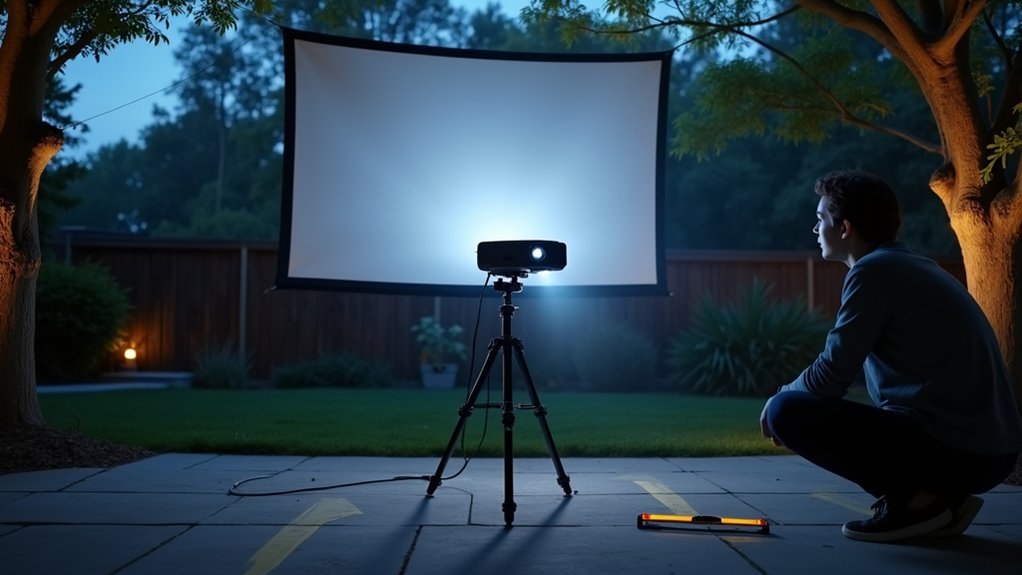
Once you’ve accounted for ambient light conditions, your next priority is positioning the projector at the correct height and angle relative to your screen. You’ll want to center your projector horizontally with your screen and match the lens height to the screen’s center point whenever possible.
| Height Position | Angle Adjustment | Result |
|---|---|---|
| Too low | Upward tilt | Keystone distortion |
| Too high | Downward tilt | Image trapezoid effect |
| Center-aligned | No tilt needed | Ideal rectangular image |
| Slightly off-center | Minor correction | Acceptable quality |
| Severely misaligned | Maximum correction | Noticeable quality loss |
Use a sturdy tripod or mounting bracket to maintain stability throughout your outdoor screening. If you can’t achieve perfect alignment, enable keystone correction sparingly—digital adjustments reduce image sharpness.
Leave Room for Audience Seating and Traffic Flow
Setting up your projector at the right distance means nothing if your audience can’t comfortably view the screen. Plan your seating area before finalizing projector placement, ensuring viewers sit at least 1.5 times the screen width away for comfortable viewing.
Map out traffic patterns around your outdoor space. You don’t want guests walking between the projector and screen during movie night, creating shadows and disruptions. Position walkways along the sides rather than through the center of your viewing area.
Consider cord placement and projector stability in high-traffic zones. Keep cables secured with tape or covers to prevent tripping hazards. If you’re using a tripod or table setup, place it where wandering guests won’t accidentally bump it and throw off your carefully calibrated distance settings.
Protect Your Equipment From Weather and Ground Conditions
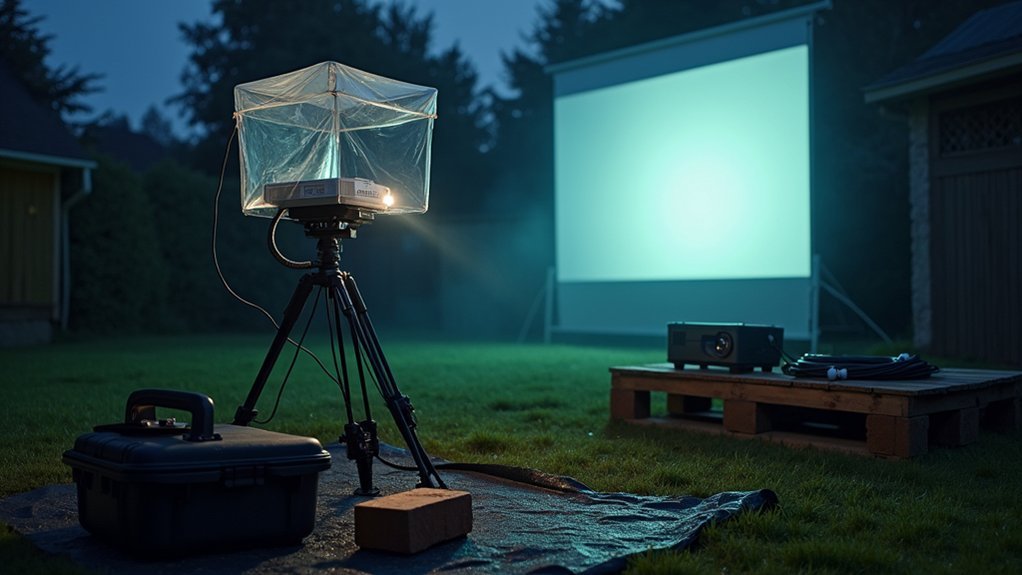
Outdoor environments throw challenges at your projector that indoor setups never face. You’ll need to shield your equipment from moisture, dust, and temperature fluctuations that can damage sensitive electronics and lenses.
| Threat | Protection Method | Equipment Needed |
|---|---|---|
| Rain/Dew | Weatherproof enclosure | Projector housing or canopy |
| Dust/Debris | Filtered ventilation | Air filters, sealed cases |
| Uneven ground | Stable mounting | Tripod with adjustable legs |
Position your projector on a level, dry surface away from sprinkler zones and foot traffic. Consider using a waterproof cover during unexpected weather changes. Elevate cables off wet grass using stakes or conduit to prevent electrical hazards. Don’t forget to check weather forecasts before your event—prevention beats damage control every time.
Frequently Asked Questions
Can I Use a Regular Indoor Projector for Outdoor Movie Nights?
You can use a regular indoor projector for outdoor movie nights, but you’ll need to protect it from moisture and dust. You should also make sure you’ve got enough brightness—at least 2,500 lumens works best outdoors.
How Do I Connect Wireless Speakers to My Outdoor Projector Setup?
You’ll connect wireless speakers to your projector using Bluetooth if it’s built-in, or add a Bluetooth transmitter to the projector’s audio output. Alternatively, you can use a portable Bluetooth speaker paired with your streaming device.
What Screen Material Works Best for Outdoor Projector Viewing?
You’ll get the best results with a high-gain white screen or gray ambient light rejecting material. These options enhance brightness and contrast, helping you combat competing light sources during your outdoor movie nights.
How Long Do Projector Bulbs Typically Last With Regular Outdoor Use?
You can expect your projector bulb to last between 2,000 and 5,000 hours with regular outdoor use. You’ll extend its lifespan by allowing proper cool-down time and protecting it from dust and moisture.
Do I Need a Permit for Outdoor Projector Events in My Neighborhood?
You’ll need to check with your local city or county office since permit requirements vary by location. Many areas require permits for outdoor events, especially if you’re projecting sound or gathering large crowds.