
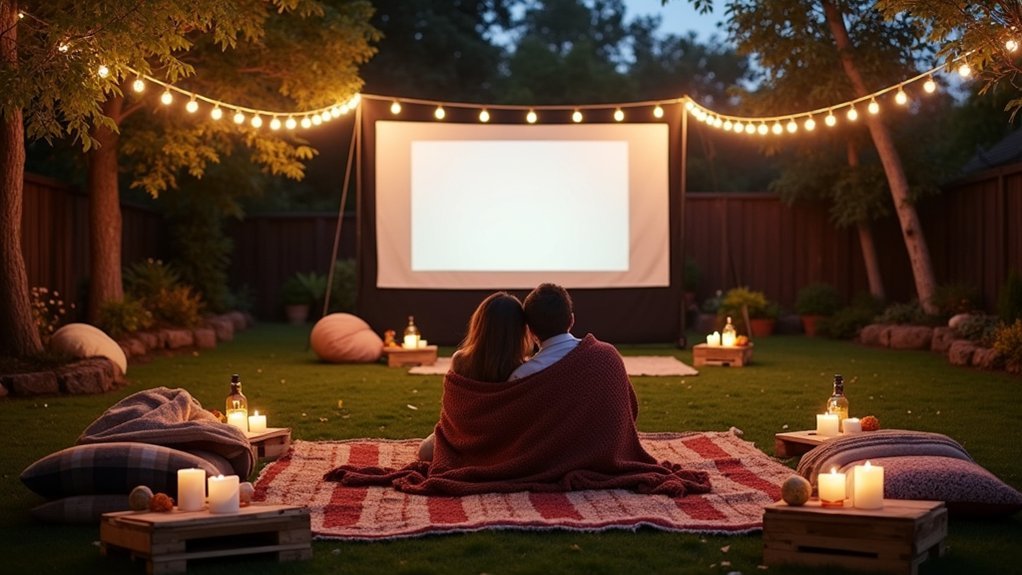
To host seasonal outdoor movie nights, you’ll need a projector with at least 2,000 lumens and a screen sized to your yard—100 inches works for most spaces. Adjust your seating by season: breathable chairs and hammocks for summer, layered quilts and blankets for fall. Position speakers toward your audience and use low-level lighting behind seating to reduce glare. Each season brings unique considerations for equipment, themes, and timing that’ll transform your backyard experience.
Choosing the Right Screen and Projector for Your Backyard Setup
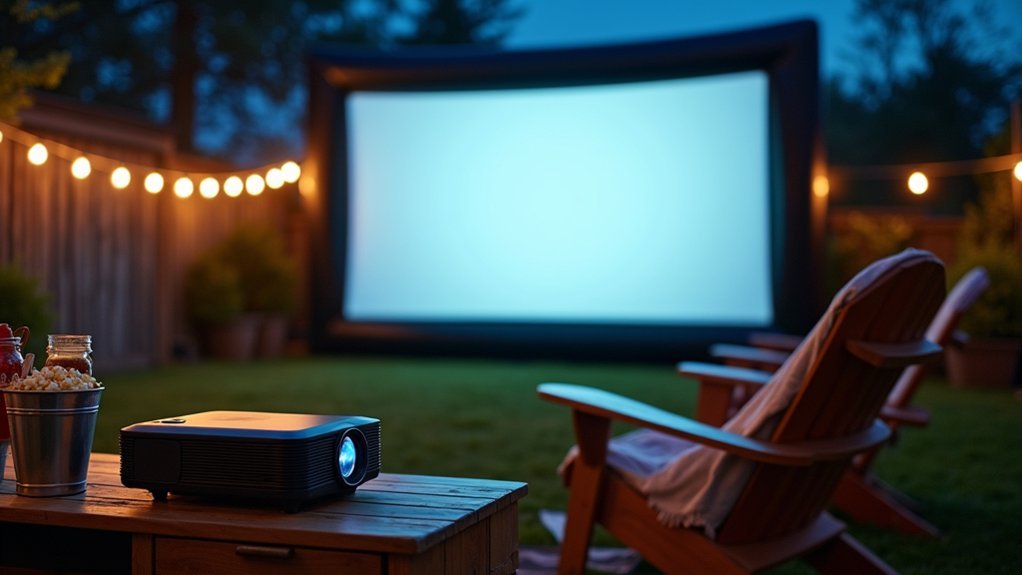
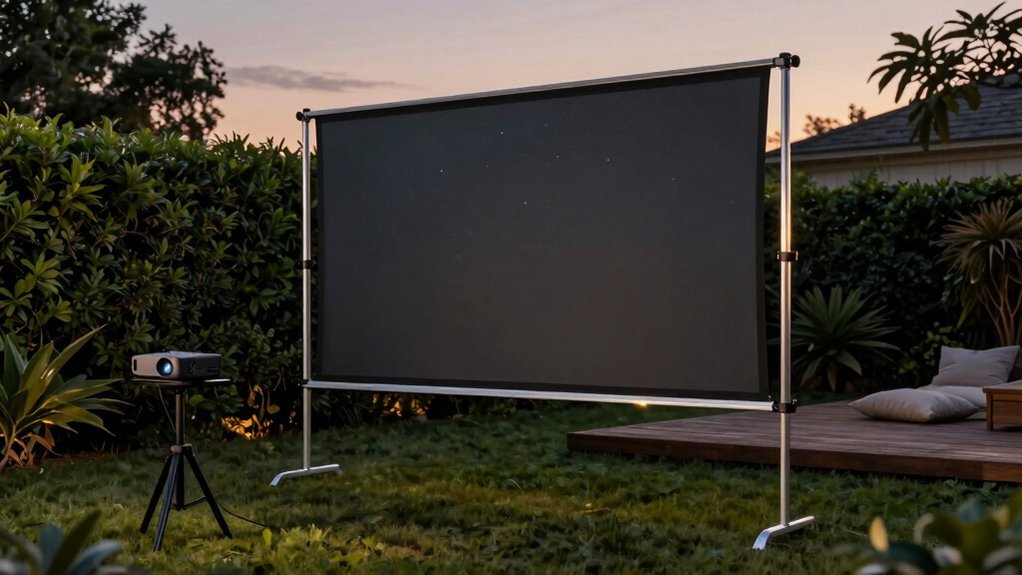
Setting up the perfect outdoor movie experience starts with selecting equipment that matches your space and viewing needs. Consider your yard’s dimensions when choosing screen size—a 100-inch screen works well for most backyard gatherings, while larger spaces can accommodate 120-inch or bigger options.
For projectors, prioritize lumens output. You’ll need at least 2,500 lumens for clear visibility during twilight screenings. If you’re starting movies after full dark, 2,000 lumens will suffice. Look for models with 1080p resolution minimum for crisp images.
Inflatable screens offer easy setup and storage, making them ideal for occasional use. Fixed frame screens deliver superior image quality but require permanent installation. Portable tripod screens split the difference, providing decent quality with reasonable convenience. Match your choice to how frequently you’ll host these events.
Creating Comfortable Seating Arrangements for Every Season
While your screen and projector form the visual foundation of your outdoor cinema, comfortable seating keeps guests engaged throughout the entire film. Adapt your arrangements to match each season’s demands for maximum comfort.
During summer months, opt for breathable lawn chairs, hammocks, or cotton blankets spread across the grass. Add outdoor floor cushions for casual lounging.
When fall arrives, layer thick quilts over hay bales or bring out padded Adirondack chairs with cozy throw blankets.
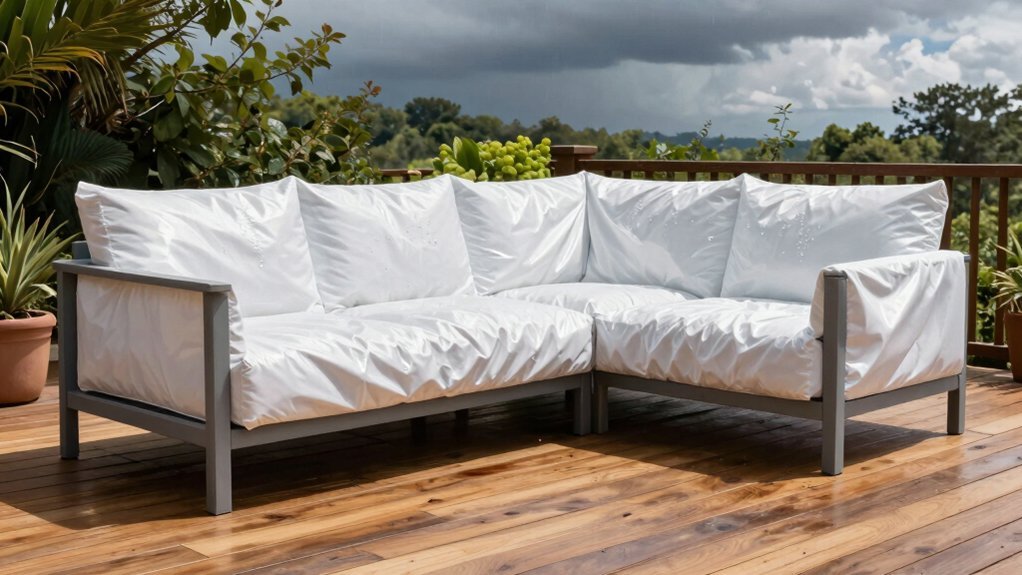
For spring screenings, waterproof ground tarps beneath blankets protect against damp grass. Position seating in curved rows to give everyone clear sightlines. Don’t forget portable side tables for drinks and snacks.
You’ll want to arrange seats at varying heights—ground level, standard chairs, and elevated options—so taller setups don’t block views behind them.
Adapting Your Audio System for Outdoor Acoustics
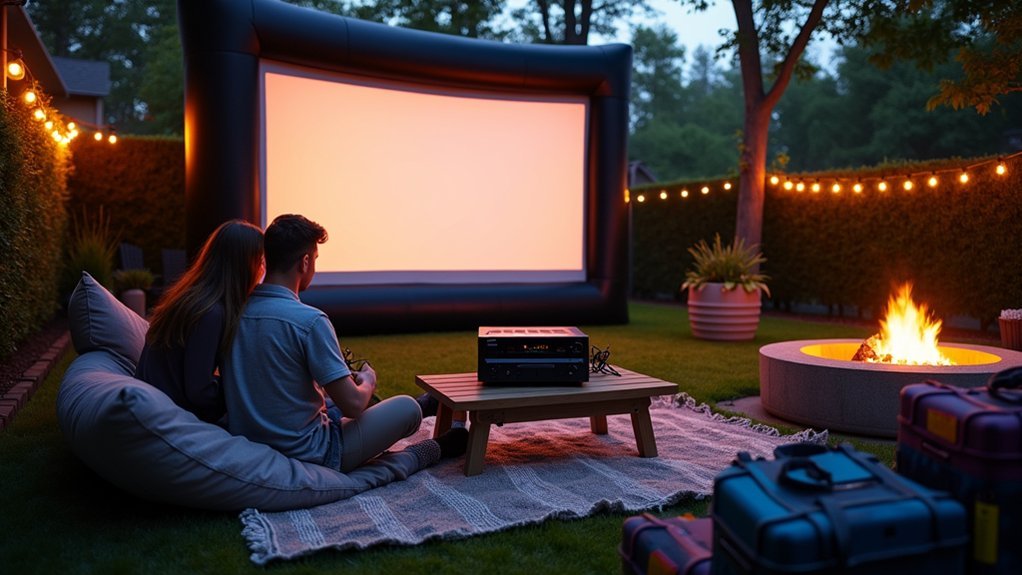
Once you’ve arranged your seating for peak comfort, you’ll need to tackle the unique challenge of delivering clear sound in an open-air environment. Unlike indoor spaces, outdoor settings lack walls to contain and reflect audio, meaning sound disperses quickly and competes with ambient noise.
Position your speakers strategically by angling them toward your audience rather than outward into open space. Elevate them slightly above ground level to project sound more effectively across your viewing area. Consider using multiple smaller speakers distributed throughout the seating zone instead of relying on two powerful units at the front.
Bluetooth speakers work well for intimate gatherings, while larger crowds benefit from a portable PA system. Always test your audio before guests arrive, adjusting volume and positioning based on wind direction and background noise levels.
Selecting Weather-Appropriate Films and Themes Throughout the Year
Beyond the technical setup, your film selection plays a crucial role in creating memorable outdoor movie nights that resonate with each season’s unique atmosphere.
Match your movie choices to the weather and mood of each season:
- Spring and summer – Choose light comedies, adventure films, and family-friendly blockbusters that complement warm evenings and relaxed vibes.
- Fall – Lean into Halloween themes with classic horror, supernatural thrillers, or cozy autumn-set films as temperatures drop.
- Winter – Select holiday favorites and heartwarming stories for bundled-up viewings under blankets.
Consider your audience’s comfort level with temperature extremes. Shorter films work better during colder months, while summer allows for double features.
You’ll also want to avoid films with hard-to-see dark scenes during brighter seasonal twilight hours.
Managing Lighting and Ambiance for Optimal Viewing Conditions
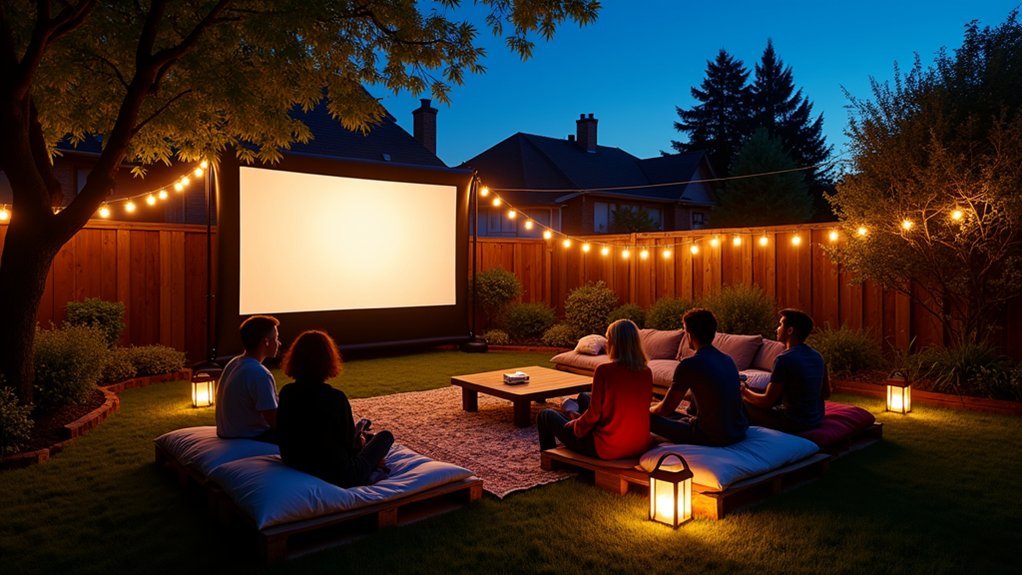
As darkness falls and your screen flickers to life, controlling the surrounding light becomes essential for picture quality. Position your screen away from streetlights, porch lights, and neighboring windows. Use blackout curtains on nearby structures or install temporary light-blocking panels to eliminate unwanted glare.
Create ambiance with strategic low-level lighting that won’t compete with your projection. Solar-powered pathway lights guide guests safely without washing out the image. Battery-operated candles and string lights placed behind seating areas add warmth while keeping the viewing zone dark.
Consider your screen’s placement relative to sunset timing. During summer months, you’ll wait longer for adequate darkness, so plan start times accordingly. In fall and winter, earlier sunsets give you more flexibility. Dimmer switches on any controllable outdoor fixtures let you adjust brightness instantly.
Frequently Asked Questions
What Permits or Permissions Do I Need to Host Outdoor Movie Nights?
You’ll need to check with your local municipality for public gathering permits, noise ordinances, and verify movie licensing through companies like Swank or Criterion. Don’t forget to get permission from your venue’s property owner.
How Do I Handle Noise Complaints From Neighbors During Outdoor Screenings?
You should communicate with neighbors before events, keep volume at reasonable levels, end screenings by 10 PM, and provide your contact information so they can reach you directly with concerns during showings.
What Snacks and Refreshments Work Best for Outdoor Movie Nights?
You’ll want classic popcorn, nachos, and candy for easy eating in the dark. Serve drinks in spill-proof cups with lids. Keep snacks portable and avoid anything too messy or crunchy that’ll distract viewers.
How Can I Prevent Mosquitoes and Bugs From Bothering Guests?
You can keep bugs away by using citronella candles, setting up outdoor fans, and providing bug spray stations. You’ll also want to avoid standing water nearby and consider using a screened-in area if possible.
What Backup Plans Should I Have if Weather Suddenly Changes?
You should prepare a backup indoor venue, rent a canopy or large tent, have tarps ready to cover equipment, and create a communication plan to quickly notify guests of any location changes.

Leave a Reply