
A spa ozonator is worth your investment if you’re a frequent hot tub user who wants cleaner water with fewer chemicals. You’ll cut chlorine and bromine use by up to 60–90%, enjoy softer water that’s gentler on your skin, and spend less time on maintenance. Most owners recoup their costs within one to two years through chemical savings alone. Understanding the differences between ozonator types will help you choose the best system for your setup.
What Is a Spa Ozonator and How Does It Work?
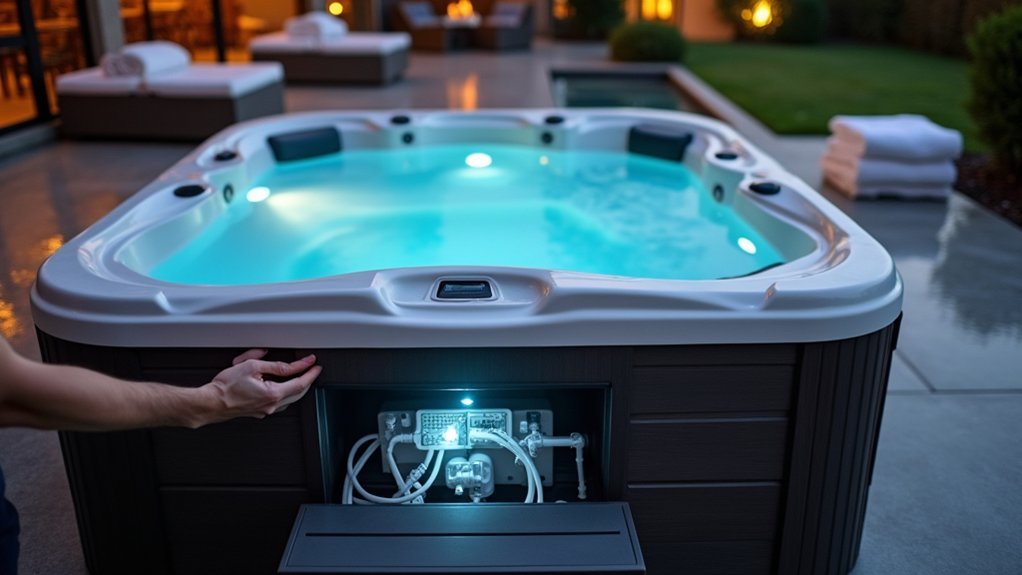
A spa ozonator is a device that generates ozone gas to sanitize your hot tub water naturally. This powerful oxidizer destroys bacteria, viruses, and other contaminants without relying heavily on traditional chemicals like chlorine or bromine.
The system works through one of two methods: ultraviolet light or corona discharge. UV ozonators pass air over a specialized light bulb that converts oxygen molecules into ozone. Corona discharge units use electrical arcs to split oxygen atoms, which then recombine as ozone.
Once generated, the ozone enters your spa water through an injector or dedicated line. It immediately attacks organic matter, breaking down oils, lotions, and microorganisms on contact. The ozone then reverts to regular oxygen, leaving no harmful residues behind in your water.
Key Benefits of Adding an Ozonator to Your Hot Tub
Understanding how ozonators work is just the beginning—knowing what they’ll actually do for your spa experience matters more.
Reduced Chemical Dependency
You’ll use up to 60% fewer sanitizing chemicals with an ozonator running. Ozone destroys bacteria, viruses, and organic contaminants before they accumulate, meaning your chlorine or bromine works less hard.
Cleaner, Softer Water
Ozone breaks down oils, lotions, and body waste that cloud your water. You’ll notice the difference—water feels silkier and doesn’t carry that harsh chemical smell.
Lower Maintenance Time
With fewer contaminants building up, you’ll spend less time balancing water chemistry and scrubbing residue from your shell.
Extended Equipment Life
Less chemical corrosion means your pumps, heaters, and jets last longer. You’re protecting your investment while enjoying better water quality.
Cost Breakdown: Initial Purchase and Installation Expenses
How much will you actually spend to add an ozonator to your spa? Entry-level CD (corona discharge) ozonators typically range from $50 to $150, while UV ozonators cost between $100 and $300. Premium models with advanced features can run $300 to $500.
Installation costs vary based on your setup. If you’re comfortable with basic plumbing, you can install most units yourself in under two hours. Professional installation adds $75 to $200 to your total expense.
You’ll also need compatible check valves and tubing, usually costing $20 to $40. Some spas require an injector manifold, adding another $30 to $60.
Your total initial investment typically falls between $100 and $700, depending on the unit quality and whether you hire professional help.
Long-Term Savings on Chemicals and Maintenance
You’ll notice significant savings on sanitizing chemicals since ozone does much of the heavy lifting in keeping your water clean.
Your maintenance schedule becomes less demanding because the ozonator continuously breaks down contaminants, reducing the buildup that typically requires frequent attention.
This gentler treatment also extends the lifespan of your spa’s pumps, heaters, and other components by minimizing chemical corrosion.
Reduced Chemical Costs
While the upfront cost of an ozonator might give you pause, the long-term savings on chemicals and maintenance make it a smart investment.
You’ll notice a significant drop in your chemical expenses almost immediately after installation.
Most spa owners report reducing their chlorine or bromine usage by 60-90% once their ozonator is running.
This translates to real money staying in your pocket month after month.
You’re not constantly buying sanitizer refills or pH balancers to compensate for heavy chemical loads.
The savings compound over time.
A typical ozonator lasts 3-5 years, and during that period, you could save hundreds of dollars on chemicals alone.
Your water stays cleaner naturally, so you’re also draining and refilling less frequently—cutting both water and chemical costs simultaneously.
Less Frequent Maintenance
Beyond the chemical savings, an ozonator dramatically cuts the time you spend maintaining your spa. Since ozone destroys contaminants continuously, you’ll clean filters less often and drain your spa water less frequently. Most spa owners extend their water changes from every 3 months to every 4-6 months with an ozonator installed.
| Maintenance Task | Frequency Reduction |
|---|---|
| Filter cleaning | 40-50% less often |
| Water draining | Up to 50% less often |
| Chemical balancing | 30-40% less often |
| Scrubbing surfaces | Substantially reduced |
You’ll reclaim hours each month that you’d otherwise spend testing, adjusting, and cleaning. This reduced workload means fewer trips to the supply store and less hassle overall. Your spa becomes truly relaxing when maintenance stops dominating your ownership experience.
Extended Equipment Lifespan
Because ozone reduces your reliance on harsh chemicals like chlorine and bromine, your spa’s components face far less corrosive damage over time. Jets, heaters, pumps, and seals all benefit from gentler water conditions. You’ll notice gaskets and O-rings lasting longer before needing replacement.
Chemical buildup accelerates wear on internal parts, but ozonated water stays cleaner without excessive sanitizer concentrations. This means your spa’s shell maintains its finish, and metal components resist pitting and deterioration.
The financial impact adds up quickly. Replacing a heater element or pump costs hundreds of dollars, and premature failures disrupt your enjoyment. By installing an ozonator, you’re protecting your investment and avoiding costly repairs. Most spa owners find their equipment runs efficiently for years longer than chemically-heavy systems allow.
Comparing Ozonator Types: UV vs. Corona Discharge Systems
When you’re shopping for a spa ozonator, you’ll encounter two main technologies: UV (ultraviolet) and corona discharge (CD) systems. Each offers distinct advantages depending on your priorities and budget.
Key differences between UV and CD ozonators:
- Ozone output: CD systems produce markedly higher ozone concentrations than UV units, making them more effective at sanitization
- Lifespan: UV bulbs typically last 1-2 years, while CD cells can operate 3-5 years before replacement
- Cost: UV ozonators have lower upfront costs, but CD systems often prove more economical long-term
- Humidity sensitivity: CD units perform better in humid spa environments where UV effectiveness can diminish
You’ll find CD ozonators dominate the premium spa market because they deliver consistent, powerful ozone production despite higher initial investment.
Potential Drawbacks and Limitations to Consider
Before you invest in a spa ozonator, you’ll want to understand the limitations that manufacturers don’t always highlight.
These systems typically last only 2-5 years before needing replacement, require maintenance that many owners overlook, and don’t sanitize every area of your spa equally.
Let’s examine these drawbacks so you can make a fully informed decision.
Ozone System Lifespan Issues
While ozone systems deliver real benefits for spa maintenance, they don’t last forever—and replacement costs can catch owners off guard.
Most ozonators need replacement every 2-5 years, depending on usage and quality. You’ll notice declining performance before complete failure, including cloudier water and increased chemical demands.
Key lifespan concerns to keep in mind:
- UV ozone bulbs degrade faster than corona discharge units, often requiring replacement within 18-24 months
- Replacement ozonators cost $100-$400, adding ongoing ownership expenses
- You may not realize your unit has failed until water quality noticeably declines
- Installation labor adds $50-$150 if you can’t handle the swap yourself
Planning for these replacements helps you budget accurately and maintain consistent water quality throughout your spa’s lifetime.
Maintenance Requirements Overlooked
Beyond replacement schedules, ozonators require ongoing maintenance that many spa owners overlook during the buying process. You’ll need to regularly inspect check valves, tubing, and injection fittings for wear or blockages. These components can degrade from ozone exposure, requiring periodic replacement.
You must also monitor your ozonator’s output levels since performance declines gradually before complete failure. Without testing, you won’t know when your system stops producing effective ozone concentrations. Many owners assume their ozonator works simply because the indicator light stays on.
Additionally, you’ll need to clean or replace air filters on corona discharge units to maintain proper airflow. Neglecting these tasks reduces sanitization effectiveness while you continue believing your water treatment remains at its best. Factor these maintenance demands into your overall cost and time investment calculations.
Limited Sanitization Coverage
Although ozonators provide powerful oxidation, they can’t sanitize every area of your spa effectively. Ozone works primarily in the water flowing through the circulation system, leaving certain zones vulnerable to bacterial growth.
Dead spots in your spa’s plumbing, jets, and corners may not receive adequate ozone exposure. This limitation means you’ll still need supplemental sanitizers to maintain safe water quality throughout the entire system.
Key coverage limitations include:
- Plumbing dead zones where water stagnates between uses
- Surface areas above the waterline that ozone can’t reach
- Biofilm buildup in pipes that resists ozone penetration
- Rapid ozone dissipation before complete circulation occurs
You shouldn’t rely on your ozonator as a standalone sanitization solution. Pairing it with chlorine or bromine guarantees thorough protection against harmful pathogens.
How Ozonators Impact Water Quality and Bather Comfort

When ozone dissolves into your spa water, it immediately begins oxidizing organic contaminants that would otherwise create cloudy, odorous conditions. You’ll notice the difference within days—water becomes crystal clear and feels noticeably softer against your skin.
| Water Quality Factor | With Ozonator |
|---|---|
| Chemical odor | Dramatically reduced |
| Water clarity | Enhanced |
| Skin irritation | Minimized |
| Chloramine formation | Decreased |
Your eyes won’t sting as much because ozone breaks down chloramines—those harsh byproducts formed when chlorine reacts with sweat and body oils. Many spa owners report their skin feels less dry after soaking. The reduced chemical demand means you’re exposed to fewer sanitizing agents overall, creating a more pleasant bathing experience. You’ll likely extend your soak time simply because the water feels better.
Making the Right Decision for Your Backyard Spa Setup
Choosing whether to install an ozonator depends on your specific usage patterns, budget, and maintenance preferences. If you use your spa frequently, the reduced chemical costs and improved water quality will offset the initial investment within one to two years.
Consider these key factors before deciding:
- Usage frequency: Daily or weekly users benefit most from ozonator systems
- Chemical sensitivity: Ozonators markedly reduce chlorine and bromine levels
- Maintenance commitment: You’ll still need regular water testing and filter cleaning
- Budget constraints: Expect to spend $150-$400 for quality units plus installation
You should also factor in replacement costs, as ozonator bulbs typically last 18-36 months. For most backyard spa owners who prioritize clean, comfortable water with less chemical handling, ozonators deliver solid value.
Frequently Asked Questions
Can I Install a Spa Ozonator Myself or Do I Need a Professional?
You can install a spa ozonator yourself if you’re handy with basic electrical work and follow the manufacturer’s instructions. However, you’ll want to hire a professional if you’re uncomfortable working with electrical components.
How Long Does a Typical Spa Ozonator Unit Last Before Needing Replacement?
You’ll typically get 3 to 5 years from your spa ozonator before it needs replacement. UV ozone systems often require bulb changes every 1 to 2 years, while CD units generally last longer.
Are Ozonators Safe to Use Around Children and Pets?
Yes, ozonators are safe around children and pets. You’ll find the ozone dissolves quickly in water, leaving no harmful residues. Just make sure you’re running the system properly and maintaining adequate ventilation around your spa.
Do Ozonators Work Effectively in All Climate Conditions and Temperatures?
Ozonators work effectively across most climate conditions, but extreme cold can reduce their efficiency. You’ll find they perform best when your spa maintains consistent water temperatures, regardless of outside weather conditions.
Can I Use an Ozonator With Saltwater Hot Tub Systems?
Yes, you can use an ozonator with your saltwater hot tub system. They’re compatible and work together effectively. The ozone enhances sanitation while reducing the salt cell’s workload, extending its lifespan and improving water quality.


Leave a Reply