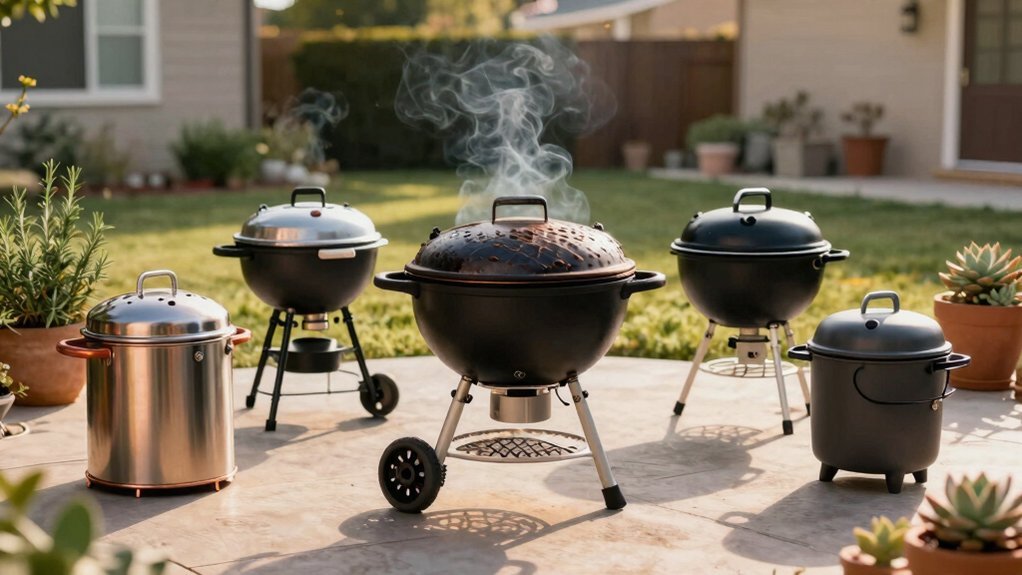

To keep wooden BBQ tool handles in top condition, never soak them or use a dishwasher. Instead, clean with warm soapy water and dry immediately after each use. Apply food-safe oils like mineral or coconut oil regularly to prevent cracking. Sand rough spots with fine-grit sandpaper before they worsen. Store tools in dry, ventilated areas away from heat. For heat damage, clean, sand, and apply protective finish. These simple practices ensure your tools remain beautiful and functional for years.
Clean Without Soaking or Dishwashing
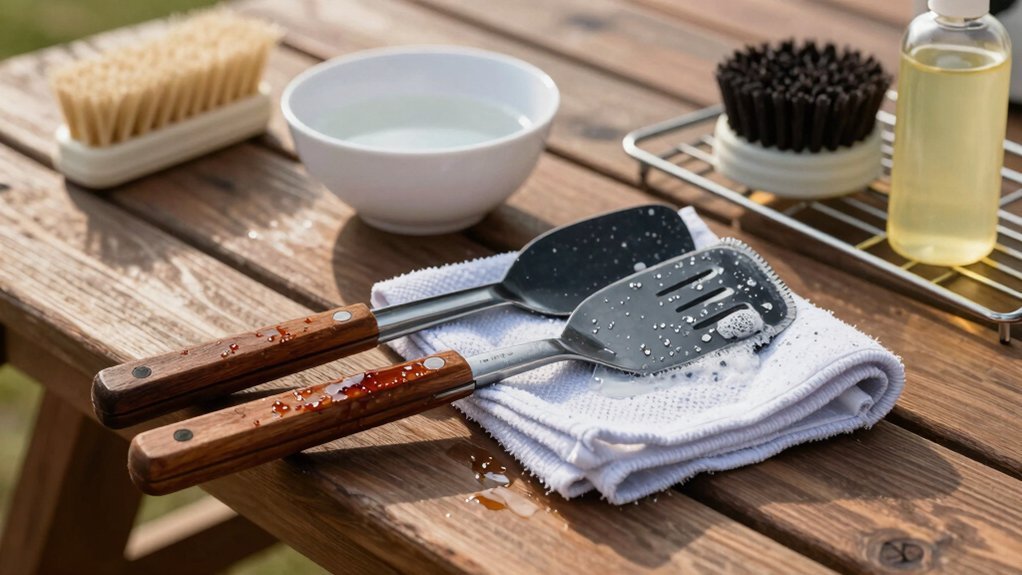
How you clean your wooden-handled BBQ tools directly impacts their lifespan. After grilling, avoid the temptation to soak wooden handles or toss them in the dishwasher. Instead, wash them with warm, soapy water and dry immediately to prevent warping and moisture damage.
For light residue between uses, simply wipe with a damp cloth rather than conducting a full wash. This minimizes water exposure while keeping your tools clean enough for your next cookout.
Once cleaned, ensure tools dry completely before storing to prevent mold and mildew growth. The extra minute you spend properly drying your tools will add years to their life. Remember that dishwashers are particularly harmful—their high heat and intense water cycles will quickly erode finishes and warp the wood.
Apply Food-Safe Oils for Protection
Just as seasoning protects your cast iron cookware, regular oil conditioning safeguards your wooden BBQ tool handles from the elements. Choose food-safe oils like mineral oil or coconut oil blends to create a moisture barrier that prevents cracking and drying.
| Oil Type | Benefits |
|---|---|
| Mineral Oil | Non-toxic, odorless, won’t go rancid |
| Coconut Oil | Natural, pleasant scent, antimicrobial |
| Beeswax Blends | Extra protection, longer-lasting finish |
| Walnut Oil | Deep penetration, natural look |
| Linseed Oil (food-grade) | Durable finish, traditional choice |
Apply a thin coat to all wood surfaces and wipe off excess. Let it absorb until the wood feels tack-free. Reapply whenever the wood looks dry—typically monthly with regular use or more frequently in dry climates. Always re-oil after washing to restore the protective barrier.
Sand and Smooth Rough Spots Early
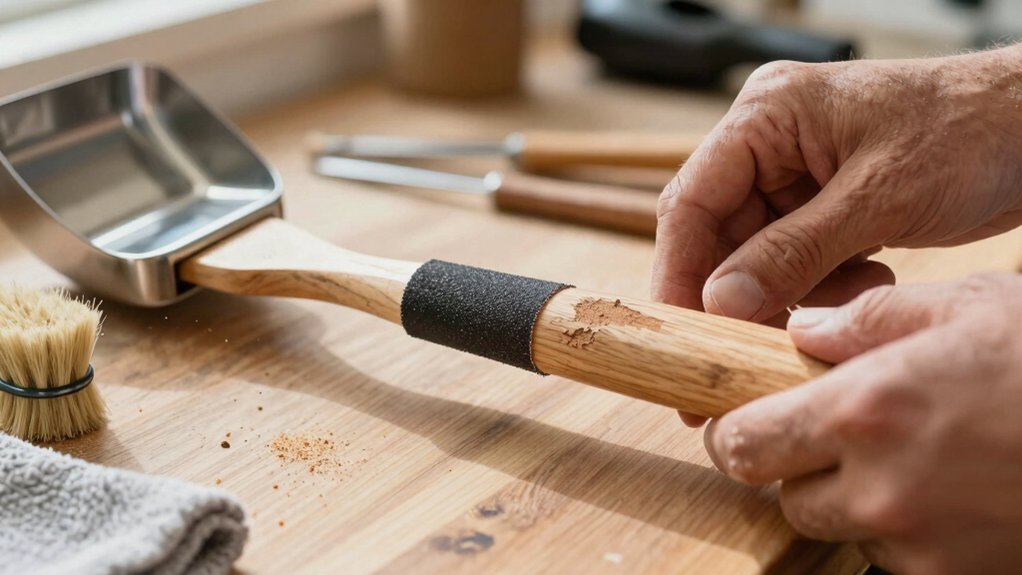
While oil treatment protects your wooden handles from moisture damage, surface irregularities can still compromise both comfort and durability. Regularly inspect your BBQ tool handles for splinters or raised grain that might affect your grip during use.
When you find rough spots, grab fine-grit sandpaper (150-220 grit) and sand in the direction of the wood grain. This prevents weakening cross-grain scratches. For deeper problem areas, apply a thin layer of wood filler to create an even surface before sanding.
After smoothing, use a tack cloth to remove all dust particles, then wipe the handle with a slightly damp cloth. Allow it to dry completely before applying any finish. This simple maintenance step ensures your wooden handles remain comfortable in your hands while extending their lifespan.
Store Properly Between Grilling Sessions
The storage conditions between grilling sessions can dramatically impact the lifespan of your wooden-handled BBQ tools. Always store them in a dry, ventilated area away from direct heat sources to prevent warping and excessive drying of the wood.
Never put wooden-handled tools in the dishwasher. The intense heat and moisture will strip finishes and cause splintering. Instead, wipe them clean after use and dry thoroughly before storing to prevent mold growth.
If handles look dry or feel rough, apply a light coat of mineral oil before storage. This maintains the wood’s integrity and appearance.
Position your tools horizontally or at a slight angle during storage. This prevents moisture from settling along the grain, which can lead to premature deterioration of your favorite grilling companions.
Address Heat Damage With Restoration Techniques
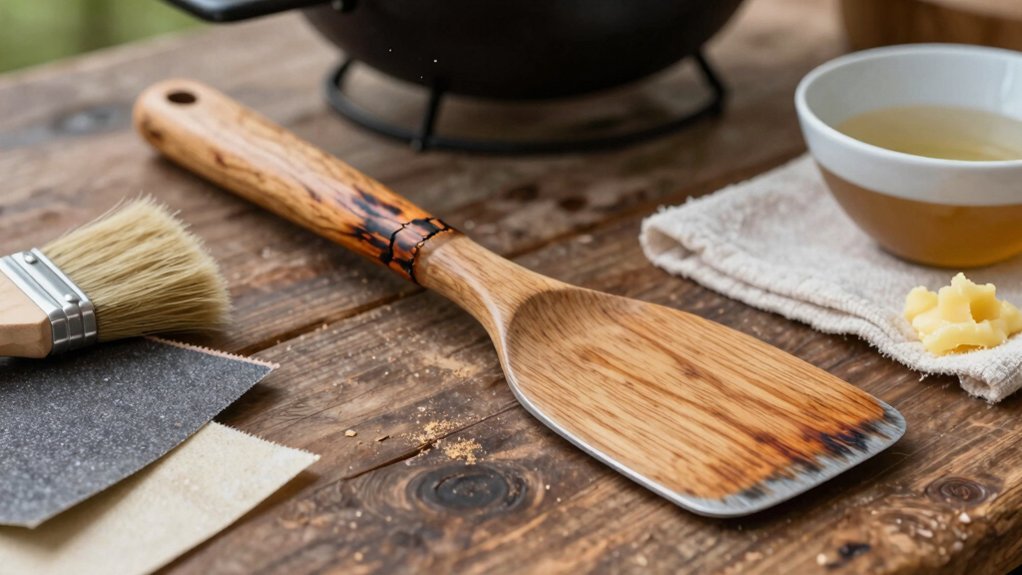
Even with proper storage, wooden handles inevitably face heat exposure during grilling sessions. When you notice the finish deteriorating, don’t reach for the dishwasher—high heat and harsh detergents will only worsen the damage by causing cracking and warping.
Instead, restore heat-damaged handles by hand. First, thoroughly clean and dry the wood, then lightly sand it to smooth the grain. Apply a protective finish like spar varnish, lacquer, or tung oil in a controlled environment, allowing full cure time before your next grilling adventure.
Remember that repeated heat cycling degrades finishes over time. After each season of heavy use, reapply oil or varnish sparingly to maintain protection. This simple maintenance routine will extend the life of your wooden-handled BBQ tools and keep them looking their best.
Frequently Asked Questions
How to Protect Wooden Tool Handles?
Clean with soapy water, dry immediately, and regularly apply mineral oil or linseed oil. Don’t put in dishwashers. You’ll prevent warping, cracking, and splintering by hand washing and maintaining a protective finish.
What Is Required to Care for and Maintain Wooden Tool Handles?
You’ll need to hand wash your wooden handles with warm soapy water, dry immediately, and regularly apply oil followed by wax to prevent drying and warping.
What Is the Best Oil for Wooden Handled Tools?
Mineral oil is your best choice for wooden handles. It won’t go rancid, remains food-safe, and won’t develop a sticky finish. You’ll need to reapply it periodically.
Am I Supposed to Oil My Wooden Utensils?
Yes, you should oil your wooden utensils regularly. It nourishes the wood, prevents cracking, and extends their lifespan. Apply food-safe oil monthly or when they look dry to maintain them properly.