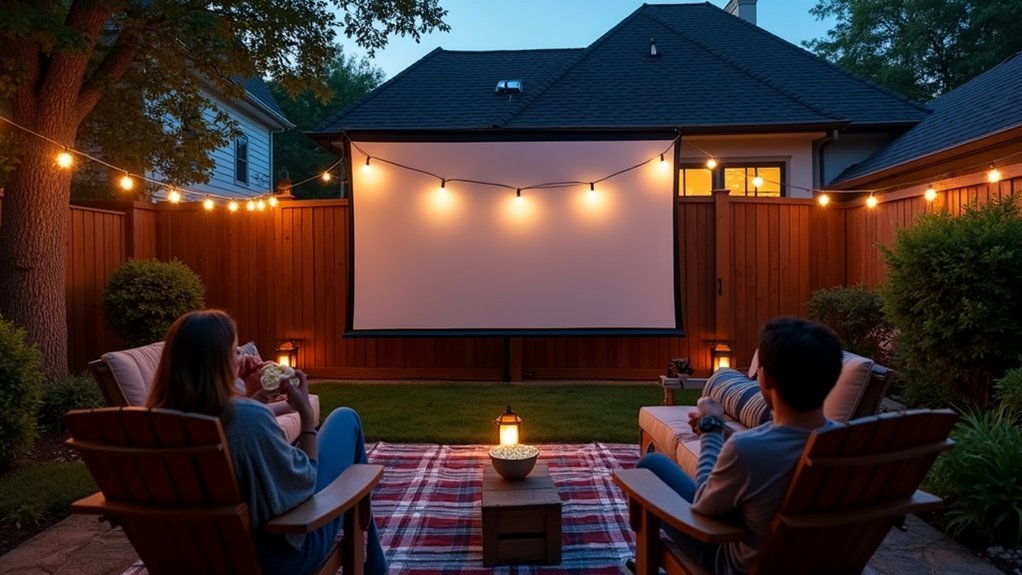
To host a secure backyard movie night, you’ll want to position your screen away from fire pits and overhead hazards while using outdoor-rated extension cords plugged into GFCI-protected outlets. Keep cables secured along fence lines with protective covers to prevent trips, and never leave expensive equipment unattended. Use waterproof covers for your projector and maintain food temperatures safely with coolers and warming dishes. The tips below cover everything from theft prevention to emergency preparedness.
Choosing a Safe Location for Your Outdoor Screen
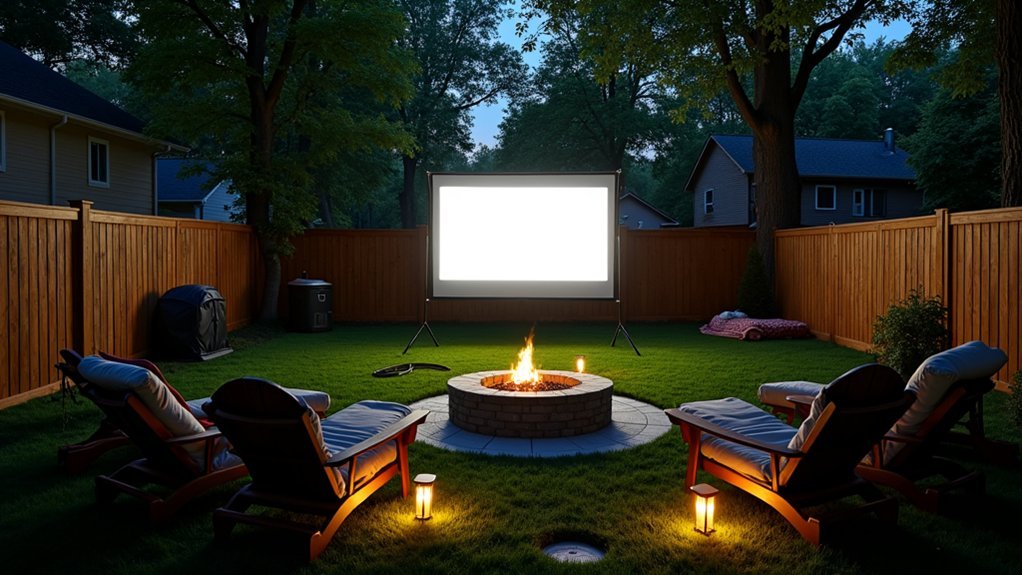
When you’re setting up for a backyard movie night, the location of your screen matters more than you might think. You’ll want to position your screen away from fire pits, grills, and any open flames that could pose a hazard. Check overhead for loose branches or power lines that might interfere with your setup.
Select a flat, stable surface where your screen won’t topple if wind picks up. Keep the area clear of tripping hazards like garden hoses, extension cords, and uneven ground. Route all cables along fence lines or secure them with tape.
Consider your neighbors’ sightlines and property boundaries to avoid disputes. Position seating so guests have clear exit paths in case of emergencies. Good planning makes certain everyone enjoys the show safely.
Electrical Safety Tips for Outdoor Movie Equipment
Once you’ve secured the perfect spot for your screen, your next priority is powering your equipment safely. Outdoor electrical setups pose unique risks, but you can prevent accidents with proper precautions.
Always use outdoor-rated extension cords designed for exterior conditions. Keep all connections elevated and dry, and never run cords under rugs where heat can build up. Plug your equipment into a GFCI-protected outlet to guard against electrical shock.
| Hazard | Prevention |
|---|---|
| Water exposure | Use weatherproof covers |
| Overloaded circuits | Calculate total wattage |
| Tripping hazards | Secure cords with tape |
| Damaged cords | Inspect before each use |
| Electrical shock | Install GFCI protection |
Don’t daisy-chain multiple extension cords together. Instead, invest in one long outdoor-rated cord that reaches your equipment directly.
Securing Your Projector and Audio Equipment From Theft
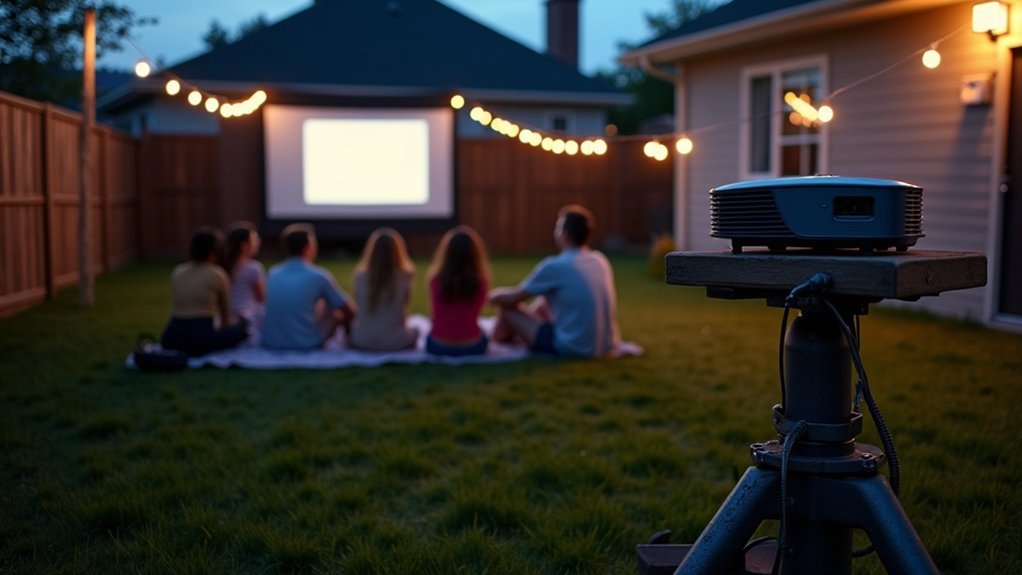
Protect your investment by never leaving expensive equipment unattended during your outdoor movie night. Assign a trusted friend or family member to monitor your setup, especially during bathroom breaks or snack runs.
Consider using cable locks to secure your projector to a heavy table or permanent structure. Many projectors have built-in security slots compatible with standard laptop locks. For speakers and amplifiers, position them close to your seating area where you can maintain visual contact.
When the movie ends, pack up immediately rather than waiting until morning. Store equipment inside your home or a locked garage before guests leave. If you’re hosting regularly, invest in a lockable outdoor storage cabinet positioned near your screening area for quick, secure storage between showings.
Weatherproofing Your Backyard Movie Setup
You’ve secured your equipment from theft, but now you need to protect it from the elements. Unpredictable weather can quickly destroy your projector, speakers, and screen if you’re not prepared with proper safeguards.
Investing in waterproof equipment covers, wind-resistant screen solutions, and moisture protection for your electronics will keep your backyard movie setup safe through rain, humidity, and gusty conditions.
Waterproof Equipment Covers
Investing in quality waterproof equipment covers is essential when you’re leaving projectors, speakers, or screens outdoors between movie nights. Look for covers made from heavy-duty polyester or vinyl with sealed seams that prevent moisture penetration. Make certain each cover fits snugly around your specific equipment dimensions to block rain, dew, and humidity.
Choose covers with UV protection to prevent sun damage during daytime hours. Ventilated designs help prevent condensation buildup underneath, which can harm electronics just as much as direct water exposure.
Don’t overlook cable connections and junction points—use weatherproof boxes or silicone covers for these vulnerable areas. Store remote controls and smaller accessories in waterproof containers nearby. Before each screening, remove covers carefully and inspect equipment for any moisture that may have accumulated despite your precautions.
Wind-Resistant Screen Solutions
Strong gusts can quickly turn your outdoor movie screen into a sail, toppling equipment and ruining your evening’s entertainment. You’ll want to invest in screens specifically designed to handle wind conditions.
Look for inflatable screens with weighted bases or stake-down options that anchor firmly into grass. Frame-mounted screens with tensioned fabric resist flapping and maintain picture quality during breezes. Some models feature mesh or perforated materials that allow wind to pass through while still displaying crisp images.
Position your screen strategically using natural windbreaks like fences, hedges, or your home’s exterior walls. You can also create temporary barriers with privacy screens or tarps on the windward side. Always check weather forecasts before setup, and have a backup indoor plan ready when conditions become too challenging.
Moisture Protection for Electronics
Protecting your electronics from moisture ranks among the most critical aspects of outdoor movie hosting.
Even on clear nights, dew can form on equipment as temperatures drop, potentially damaging projectors, speakers, and cables.
Invest in weather-resistant covers specifically designed for outdoor electronics.
You’ll want to position your projector inside a ventilated enclosure that shields it from unexpected moisture while preventing overheating.
Silica gel packets placed near equipment absorb ambient humidity effectively.
Elevate all electronics off the ground using tables or platforms to avoid grass moisture.
Run cables through protective conduits and seal connection points with weatherproof tape.
Keep a waterproof tarp nearby for quick coverage if conditions change suddenly.
Store equipment indoors immediately after each screening to prevent prolonged exposure to nighttime humidity.
Proper Lighting for Safe Guest Navigation
Beyond the glow of your projector screen, you’ll need strategic lighting to help guests move safely through your backyard. Pathway lights prevent trips and falls while maintaining that cinematic ambiance you’ve worked hard to create.
Consider these essential lighting placements:
- Walkway borders – Line paths from your house to the seating area with solar stakes or LED path lights spaced every four feet.
- Step illumination – Mark elevation changes with small spotlights or adhesive LED strips to prevent stumbles.
- Bathroom route markers – Guide guests to indoor facilities with subtle ground-level lighting that won’t disrupt the movie.
Choose warm, low-intensity bulbs that won’t compete with your screen. Motion-activated lights near entry points add security without creating constant distractions during your film.
Fire Safety Around Outdoor Seating Areas
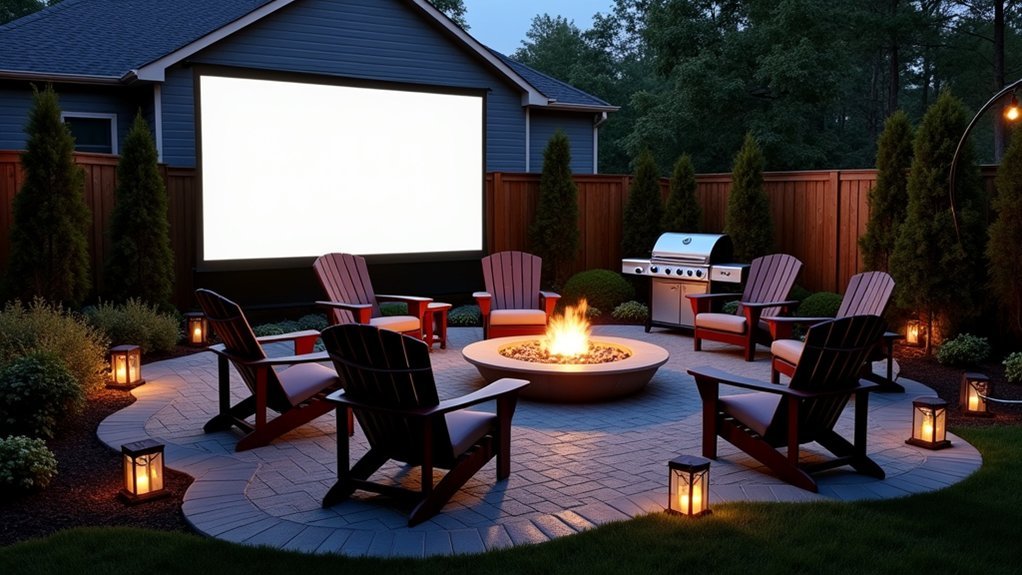
Fire pits and citronella torches often enhance the cozy atmosphere of an outdoor movie night, but they require careful placement to keep your guests safe. Position any open flame at least ten feet from seating areas, blankets, and the projection screen. You’ll want to create a clear perimeter that prevents accidental contact, especially when guests move around in low light.
Keep a fire extinguisher or garden hose within reach throughout the evening. Never leave flames unattended, and assign someone to monitor them during the movie. Before guests arrive, clear dry leaves and debris from areas surrounding fire features.
When the night ends, fully extinguish all flames with water and confirm they’re cold before heading inside. These precautions let everyone enjoy the ambiance without worry.
Childproofing Your Movie Night Environment
While fire safety protects everyone at your outdoor movie night, families with young children face additional hazards that deserve attention.
Start by securing all cables and cords with tape or cord covers to prevent tripping. Position your projector and speakers out of reach, ideally on stable elevated surfaces children can’t access.
Follow these essential childproofing steps:
- Create a designated play zone away from equipment with soft blankets and pillows
- Cover all electrical outlets with weatherproof safety caps
- Remove or secure any garden tools, chemicals, or sharp objects from the viewing area
Keep flashlights accessible for bathroom trips and establish clear boundaries before the movie starts. Assign an adult to monitor younger children throughout the event, ensuring they stay within safe zones.
Keeping Extension Cords and Cables Trip-Free
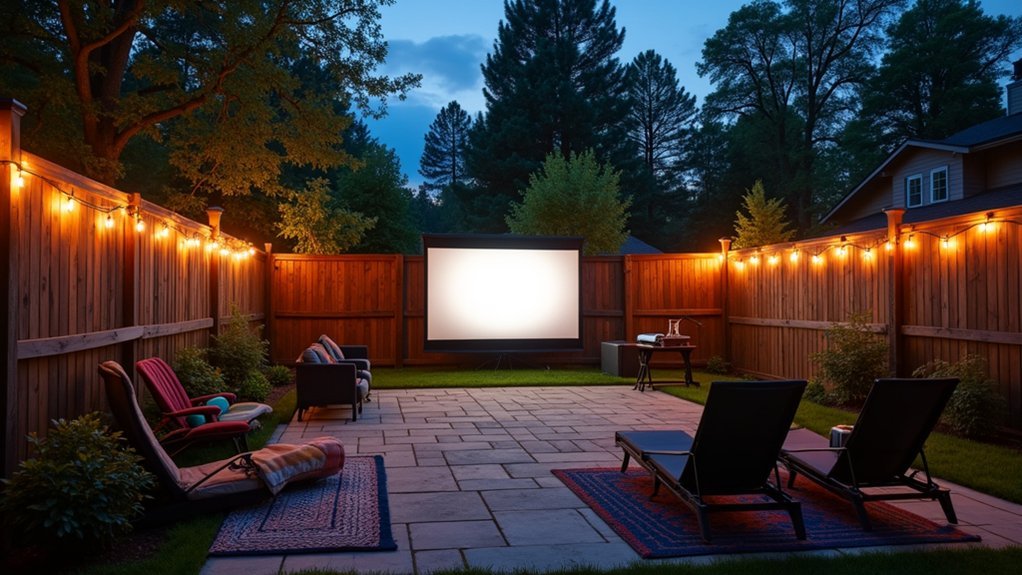
With guests moving between seating areas, snack tables, and the house, unsecured cables become serious tripping hazards once darkness falls. You’ll want to address cable management before your first guest arrives.
Run extension cords along fence lines, garden borders, or building edges where foot traffic doesn’t occur. Secure them with landscape stakes or outdoor-rated cable covers designed for temporary use. If cables must cross walkways, use rubber cord protectors that create a gradual ramp people can safely walk over.
Keep cable runs as short as possible by positioning your power source strategically. Use bright tape or glow strips to mark any unavoidable crossing points. Before showtime, walk your entire setup in dim lighting to identify problem areas you might’ve missed during daylight preparation.
Food Safety Guidelines for Outdoor Snack Stations
When you’re setting up outdoor snack stations, you’ll need to keep perishable items at safe temperatures to prevent bacterial growth. Use ice baths or coolers to maintain cold foods below 40°F, and don’t leave items sitting out for more than two hours.
You should also separate raw and ready-to-eat foods with designated utensils and serving areas to avoid cross-contamination.
Temperature Control for Perishables
Beyond the glow of your projector screen, your outdoor snack station faces a silent threat that can turn a fun evening into a food safety nightmare. Bacteria multiply rapidly when perishables sit in the “danger zone” between 40°F and 140°F for more than two hours.
Keep your guests safe with these temperature control essentials:
- Use ice baths or coolers – Nestle dips, cheese platters, and sliced fruits in containers surrounded by ice to maintain temperatures below 40°F.
- Set timers – Replace perishable items every 90 minutes during warm weather to stay ahead of bacterial growth.
- Invest in warming trays – Keep hot appetizers above 140°F using electric warming dishes or chafing sets with fuel canisters.
Monitor temperatures with a food thermometer throughout your event.
Preventing Cross-Contamination Outdoors
Separate your raw ingredients from ready-to-eat foods to protect your guests from harmful bacteria that spread through direct contact. Use designated cutting boards and utensils for different food types, and never place cooked items on surfaces that held raw meat.
Set up distinct zones at your outdoor snack station. Keep fruits, vegetables, and prepared snacks on one table while maintaining a separate prep area for any items requiring handling. Color-coded containers help guests identify which foods belong where.
Bring extra serving spoons so guests don’t mix utensils between dishes. Provide hand sanitizer stations near your food tables, and encourage everyone to clean their hands before grabbing snacks. Cover all dishes with mesh food tents to block insects and airborne contaminants between servings.
Privacy Measures to Protect Your Screening From Neighbors
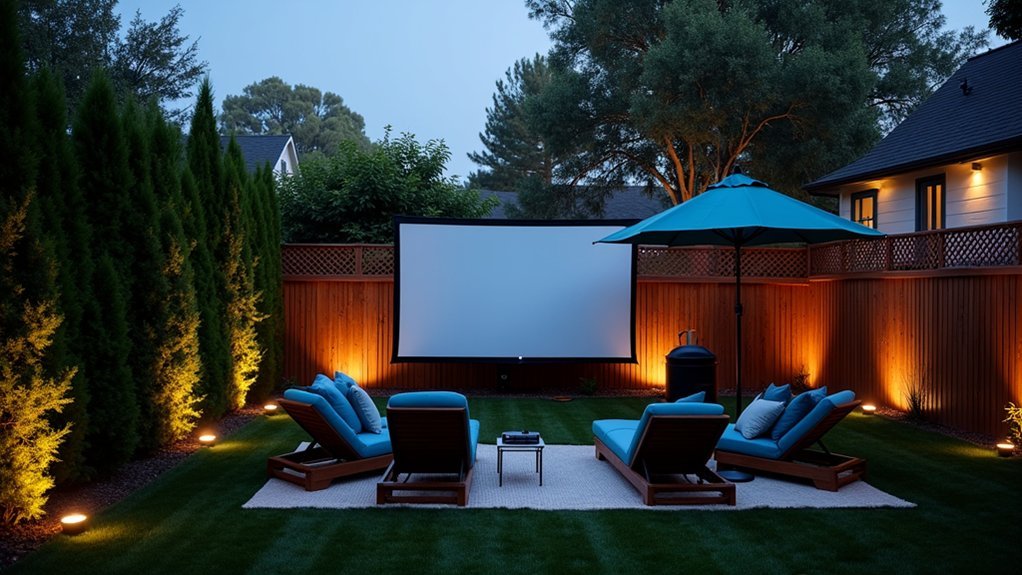
Although you’re excited to share the cinematic experience with friends and family, your neighbors mightn’t appreciate an uninvited view of your movie screen or the ambient glow spilling into their windows.
Your backyard cinema shouldn’t become your neighbor’s uninvited light show—thoughtful planning keeps everyone happy.
Here are three effective privacy measures worth considering:
- Install outdoor privacy screens or curtains around your viewing area to block sightlines and contain light within your space.
- Position your screen strategically so it faces away from neighboring properties, minimizing visibility and light spillage.
- Use landscaping elements like tall hedges, trellises with climbing plants, or portable planters to create natural barriers.
You should also keep volume levels reasonable and communicate with neighbors beforehand about your event.
A quick heads-up builds goodwill and prevents complaints before they start, ensuring everyone enjoys their evening.
Emergency Preparedness for Outdoor Entertainment Events
Planning for unexpected situations guarantees your backyard movie night doesn’t turn into a disaster when things go wrong.
Keep a first aid kit nearby with bandages, antiseptic wipes, and pain relievers. Store flashlights at accessible points so guests can navigate safely if your projector fails. Designate a clear path to your home’s interior in case of sudden weather changes.
You’ll want to check weather forecasts before your event and establish a rain backup plan. Position fire extinguishers within reach if you’re using outdoor heaters or candles. Share your WiFi password and address with guests so they can call for help if needed.
Create an emergency contact list and know the location of your electrical panel. Quick thinking prevents minor issues from becoming major problems.
Frequently Asked Questions
What Screen Size Works Best for a Backyard With 20 Guests?
You’ll want a screen between 120 and 150 inches for 20 guests. This size guarantees everyone can see clearly from various distances. Position your seating in a semi-circle arrangement for prime viewing angles.
Do I Need a License to Show Movies in My Backyard?
You don’t need a license for private backyard screenings with friends and family. However, if you’re charging admission or hosting a public event, you’ll need to obtain public performance rights.
What Time Should Outdoor Movie Nights Start During Summer Months?
You should start your outdoor movie night about 30 minutes after sunset, typically between 8:30 and 9:30 PM during summer months. This guarantees you’ll have enough darkness for peak screen visibility.
How Do I Connect Streaming Services to an Outdoor Projector?
You’ll connect your streaming device (like a Roku, Fire Stick, or Chromecast) to your projector’s HDMI port. Then connect to your Wi-Fi network and log into your streaming apps to start watching.
What Snacks Are Easiest to Serve During an Outdoor Movie Screening?
You’ll find popcorn, pretzels, and individually wrapped candies work best since they’re mess-free and don’t require utensils. Pre-portioned snack bags make distribution simple, and you won’t worry about spills ruining your outdoor setup.